Live Camera will be available soon. Check our daily updates below.
Forest Undergrowth & Migration Corridors:
Cat Tien Live Patrol Cam 008
Strategically positioned within the dense evergreen forests of Cat Tien National Park, CAM008 monitors some of the park’s most active wildlife corridors. This vantage point offers a rare glimpse into the forest’s “hidden highways,” where animals move quietly through the undergrowth to forage, migrate, and establish territories beneath the canopy.
Streaming continuously 24/7, CAM008 captures the raw, unscripted rhythms of life in the forest - moments that often go unseen.
These recordings feed directly into Katien AI Sentinel, where high-precision algorithms analyze species presence, movement patterns, and population density. The insights gathered here play a crucial role in shaping and strengthening ongoing conservation efforts.
A group of monkeys is observed around midday in the evergreen forest of Cat Tien National Park, a time when activity in the forest can briefly slow before picking up again later in the afternoon.
The group is highly active and spread across different levels of the forest. Some individuals move confidently through the canopy, climbing and leaping between branches, while others descend closer to the ground and even into the water, showing their adaptability to different parts of the habitat.
Social behaviour is also clearly visible. Several monkeys can be seen grooming one another - carefully picking through fur to remove dirt and parasites. This behaviour, often referred to as social grooming, plays an important role not just in hygiene but also in strengthening social bonds within the group.
Despite the heat of midday, the group remains engaged in a mix of movement, play, and interaction. Moments like this offer a glimpse into the daily life of primates in tropical forests, where even quieter hours can reveal a rich range of behaviours when observed closely.
This vantage point monitors a critical ground-level transition zone for primate troops like these Long-tailed Macaques moving between foraging sites.
Species identification: Highly social primates with grayish-brown fur and elongated tails, seen here in a multi-generational group.
Behavioral insight: Footage reveals complex social vigilance. While the troop moves across the open ground, adult members maintain high alert, scanning for predators, while juveniles engage in intermittent foraging and play. This coordinated movement suggests the area is a well-established transit route linking different canopy sections.
During the morning transition, the forest floor becomes a preferred foraging ground for Emerald Dove - a secretive ground-dwelling bird.
Species identification: A medium-sized dove characterized by iridescent green wings and brownish-pink plumage, which provides excellent camouflage in shaded areas.
Behavioral insight: The camera records the bird utilizing the sun-dappled forest floor to forage for fallen seeds. It displays a methodical "stop-and-search" behavior, bobbing its head while scanning the soil, demonstrating how these birds exploit specific light conditions for better visibility.
This camera documents a rare glimpse into the solitary nocturnal life of small carnivores within the deep forest - the Masked Palm Civet:
Species identification: A medium-sized mammal featuring a distinctive white stripe on the forehead and a long, thick tail, appearing dark with high contrast under infrared illumination.
Behavioral insight: CAM008 captures the civet moving with extreme agility through the leaf litter. The animal exhibits high sensory focus, frequently pausing to sniff the ground for fallen fruits or small invertebrates. Its fluid, ghost-like motion illustrates its role as a highly efficient, low-light opportunistic feeder.
This camera documents the active foraging patterns of one of the forest's most vocal and territorial avian species within the lower vegetation strata - the White-rumped Shama.
Species identification: A small, slender passerine bird featuring a distinctive long black tail, orange-chestnut underparts, and a prominent white patch on the lower back (rump) visible during movement.
Behavioral insight: CAM008 frequently captures the Shama dropping from low perches to the forest floor to hunt for insects. A notable behavior recorded is the quick flicking of its long tail and vigorous scratching of the leaf litter. These birds exhibit high site fidelity, often returning to the same sun-dappled clearing.
As the forest transitions to deep night, the clearing becomes a site for essential ecological engineering by large ungulates - the wild boar.
Species identification: A robust, dark-bristled wild boar with a powerful frame and a prominent snout designed for rooting.
Behavioral insight: CAM008 captures a striking sequence of "rooting" behavior. The boar uses its snout to vigorously plow through the soil in search of tubers and roots. This activity is vital for the sanctuary, as it aerates the soil and facilitates nutrient cycling, directly impacting the regeneration of the forest floor.
CAM002
Data from CAM002 confirms that the window between 7 PM and 3 AM is the most active period for the park’s hoofed residents.
CAM003
Interestingly, CAM003 rarely records these species grazing at night.
CAM005
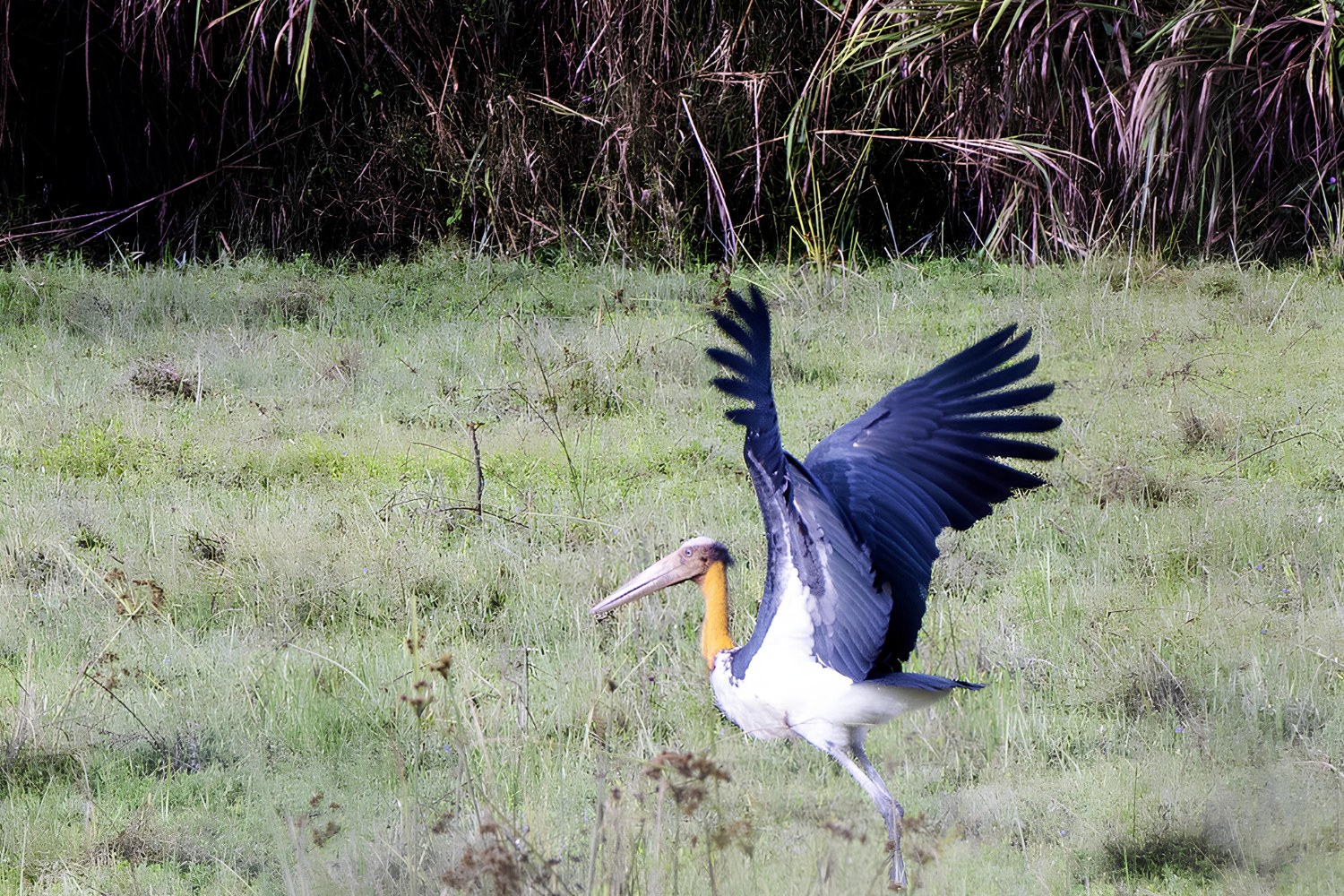
During the monitoring period, CAM005 recorded a significant gathering of Lesser Adjutant.
CAM006
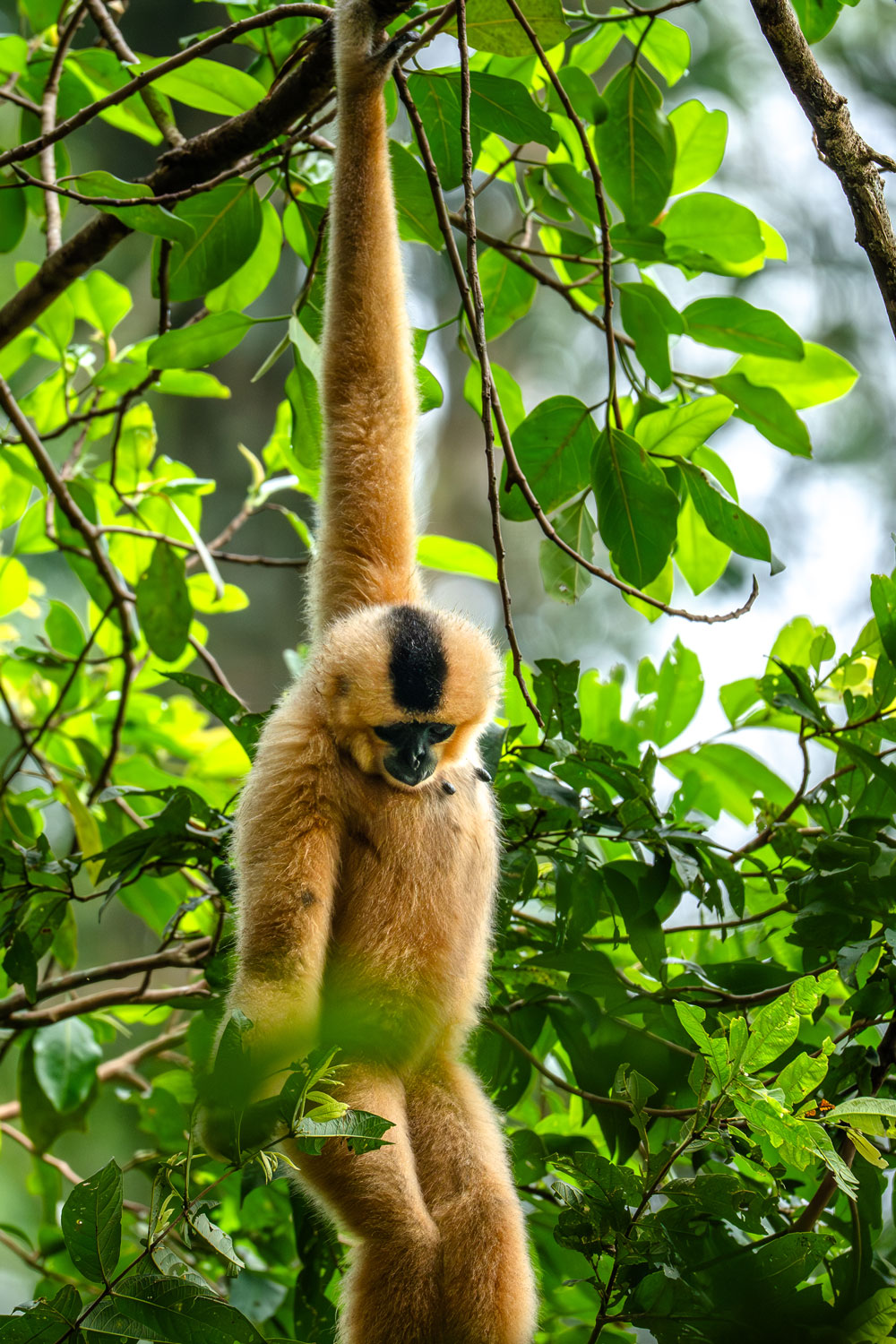
CAM006 follows the daily life of yellow-cheeked gibbons, allowing a clear view of how these share space in the canopy.
CAM007
CAM007 monitors a semi-wild enclosure dedicated to the rehabilitation of wildlife rescued from illegal trade