Beetles are the largest group of insects on Earth, making up the order Coleoptera with over 400,000 described species. They represent about 25% of all known animals and nearly 40% of all insects. From tiny featherwing beetles under 1 mm to giant Hercules beetles reaching 19 cm, beetles show incredible diversity in size, shape, color, and behavior. Their hardened forewings (elytra) protect delicate hind wings and give the group its name, meaning “sheath-winged” in Greek.
Beetles play vital roles in ecosystems as decomposers, pollinators, predators, and prey. They live almost everywhere except the ocean and polar extremes, thriving in forests, grasslands, freshwater, soil, and even homes. This overview covers their physical traits, taxonomy, habitat, global and local distribution (including Vietnam and Cat Tien National Park), and more.
| Common name | Beetles |
|---|
| Scientific name | Coleoptera (order) |
|---|
| Taxonomy |
Kingdom: Animalia
Phylum: Chordata
Class: Insecta
Order: Coleoptera
|
| Weight / Size | Weight: 0.5–5 kg (varies by species). Body length: 1 mm to 19 cm (depending on species). |
|---|
| Lifespan | Typically weeks to months; some species live longer |
|---|
| Population | 400,000 described species worldwide; possibly up to 2.1 million |
|---|
| Habitat | Forests, grasslands, wetlands, freshwater systems, and homes |
|---|
| Range | Found globally, except the ocean and polar regions |
|---|
| Diet | Varies: herbivores, decomposers, predators, and scavengers |
|---|
| Conservation status | Least Concern globally; some species are endangered or threatened |
|---|
Physical Characteristics of Beetle
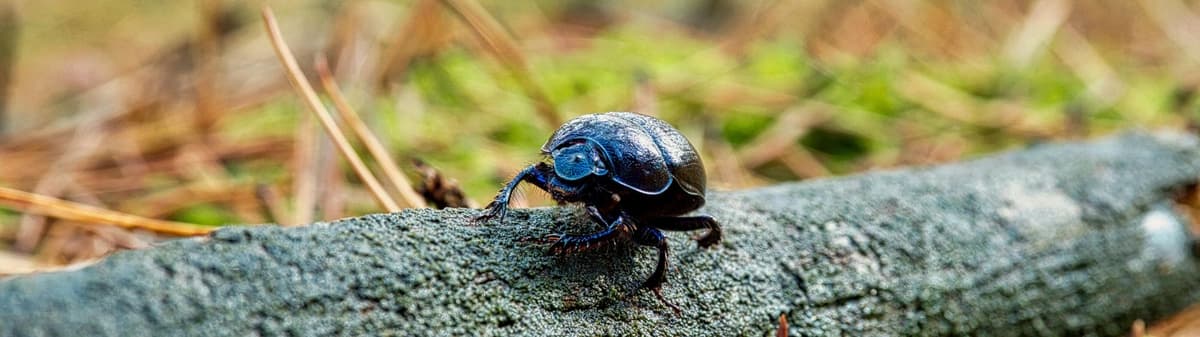
Beetles have hardened forewings called elytra that cover and protect the delicate hind wings when not in flight. Elytra patterns and textures are highly varied and often key for species identification. The body is divided into head, thorax, and abdomen. The head faces forward, with antennae usually having 11–13 segments and compound eyes. The body surface may be covered in scales, hairs, or spines.
Beetles undergo complete metamorphosis: egg, larva, pupa, adult. Larvae look completely different from adults and vary widely by species. Size ranges from microscopic (under 1 mm) to very large. The smallest known free-living insect is Scydosella musawasensis (featherwing beetle) at 0.325–0.352 mm. The longest is the Hercules beetle (Dynastes hercules), where males reach up to 19 cm including their long horn.
Colors and markings on elytra are diverse—bright reds and blacks in ladybirds (Coccinellidae), metallic greens and blues in jewel beetles, or camouflaged browns in ground beetles. Ladybird beetles are small (2–5 mm) with distinctive spots. Hind wings fold under the elytra and differ between sexes and species. For example, in some scarab beetles, wing shape helps distinguish males from females with high accuracy. Mouthparts are chewing types, adapted for different diets. Many beetles have 5–10 visible abdominal segments, often with color or shape variations.
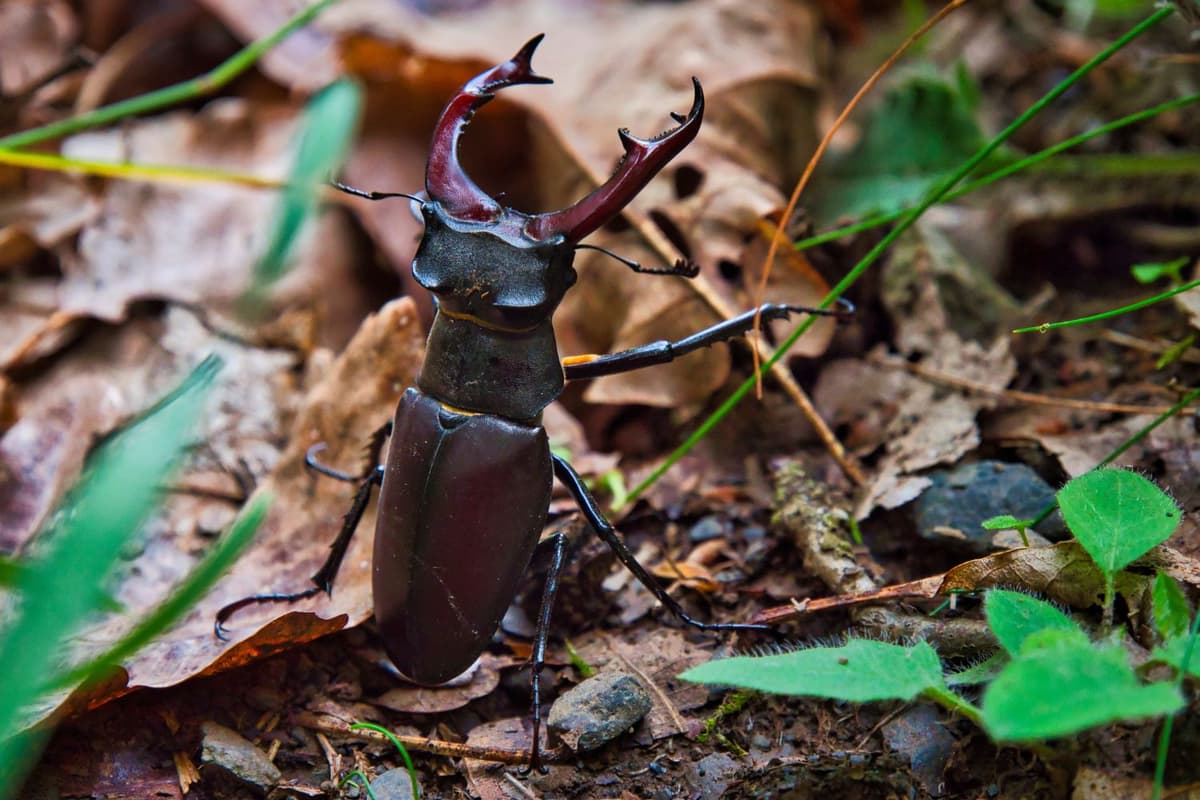
A Beetle crawls across leaves, showing its hard shell.
Taxonomy and Species Diversity of Beetles
Beetles are the largest order in the animal kingdom, divided into four suborders:
- Archostemata: primitive, ancient forms.
- Myxophaga: small aquatic or wet-habitat species.
- Adephaga: mostly predatory beetles like ground beetles and diving beetles.
- Polyphaga: the largest and most diverse, containing about 90% of species.
There are currently 166–211 families, with hundreds of subfamilies and tribes. The largest families include Staphylinidae (rove beetles), Curculionidae (weevils), Carabidae (ground beetles), Chrysomelidae (leaf beetles), and Cerambycidae (longhorn beetles).
About 400,000 species have been described (estimates range 350,000–450,000), but the true total may be 0.9–2.1 million, averaging around 1.5 million. Thousands of new species are described each year (2,800–3,200 recently), mostly from tropical rainforests in South America, Southeast Asia, and Africa.
Habitat and Distribution of Beetles
Beetles live in almost every habitat except polar extremes and open oceans. They thrive in broadleaf and conifer forests, grasslands, farmlands, wetlands, and freshwater systems like ponds and streams. Highest diversity occurs in humid primary tropical forests with thick leaf litter, decaying wood, and fungi, where beetles act as key decomposers and predators.
They occupy microhabitats: under leaf litter, on trees, inside fungi, in dung, or as parasites. Some are fully aquatic in ponds or cold mountain streams. In the mountains, beetles concentrate at 700–1,600 m in mixed conifer-broadleaf forests rich in herbs and shrubs. Riverbanks and exposed shores suit specialized species, with distribution tied to soil moisture and plants. Beetles avoid extreme deserts and high cold zones but adapt to caves, swamps, and flooded areas. In tropical rainforests, both primary and secondary forests support high numbers due to stable humidity and temperature.
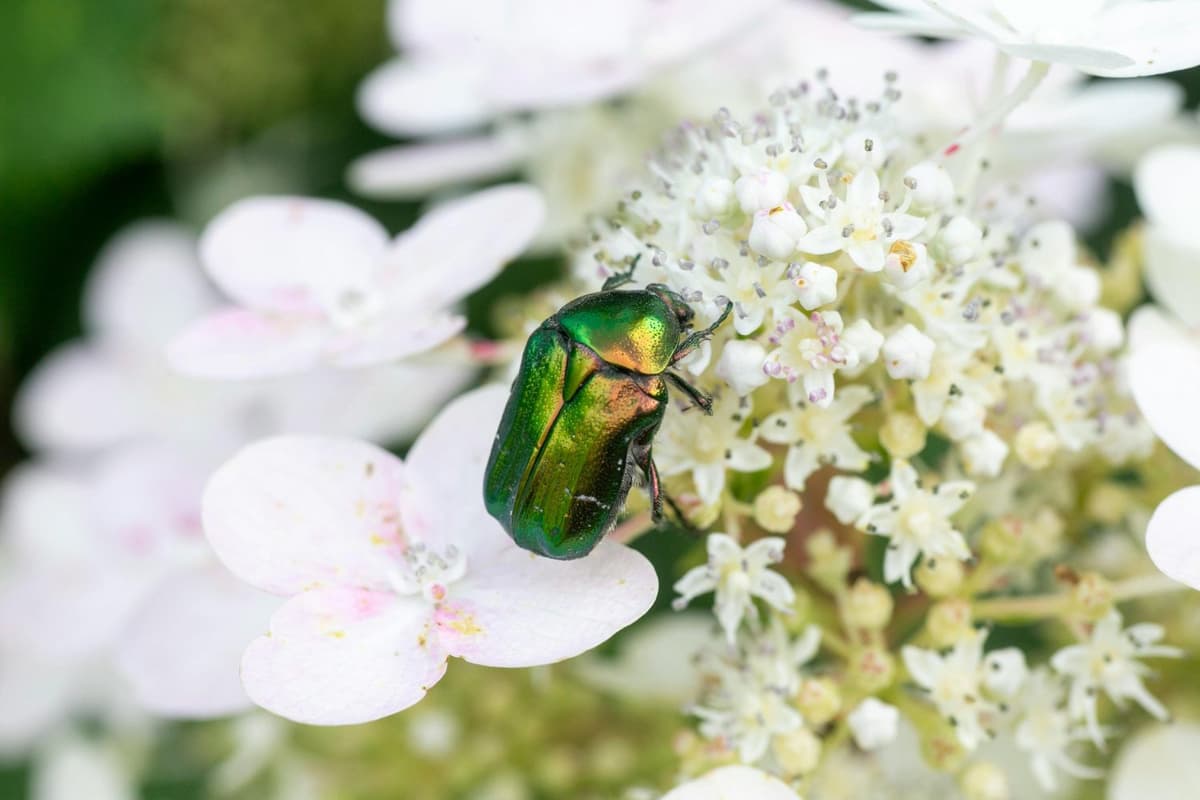
A metallic green Beetle rests on a white flower cluster.
Global Distribution of Beetles
Beetles are found worldwide, with more than 380,000 described species accounting for about 25% of all known animals and nearly 40% of insects. Diversity is highest in tropical regions, particularly the Oriental (Southeast Asia) and Neotropical (South America) realms, which together hold roughly 30.9% and 28.7% of global species.
Asia, Africa, and South America support the greatest richness, while Europe and North America contribute smaller shares (2–12%). Beetles are absent from Antarctica, but their wide spread results from ancient dispersal before the breakup of Gondwana and more recent migrations. About 49% of beetle habitats have remained stable over recent decades, but many areas face serious decline due to deforestation, agriculture, and climate change.
Beetles Distribution in Vietnam
Vietnam’s tropical forests support rich beetle diversity, especially in northern and southern regions. More than 100 species have been recorded in provinces such as Quảng Trị, Bắc Giang, and Hòa Bình. Notable species like Cheirotonus jansoni (a longhorn beetle) concentrate in southeastern mountains below 2,000 m, mainly in southern provinces. Leaf beetles (Chrysomelidae) show high diversity in national parks like Phú Quốc and Pù Luông, with 44 species documented in primary and secondary forests.
In limestone karst areas such as Pù Luông, 41 dung beetle species (Scarabaeidae) occur, with diversity decreasing from primary forest to grassland due to land-use changes. Rare species like Synapsis puluongensis are restricted to northern limestone primary forests and have low populations, requiring urgent conservation.
Beetles Distribution in Cat Tien
Cat Tien National Park hosts high beetle diversity in its lowland tropical moist forests. Tiger beetles (Cicindelinae) are recorded in open and forested areas, while bombardier beetles such as Pheropsophus occipitalis thrive in humid primary forest. Fungi-parasitic and wood-decaying beetles are abundant, with many species hosting entomopathogenic fungi in forest habitats. Diversity has been reduced by historical dioxin contamination, but beetles remain well-established in regenerating and primary forest zones.
Ecosystem interactions include termites supporting dung beetles and predatory species in the seasonal monsoon forest. Overall surveys show beetles make up a significant portion of insects in artificial ponds, lakes, and forest habitats. Mixed and evergreen forests in Cat Tien provide ideal conditions, high humidity, stable temperatures, and diverse microhabitats for many beetle families to flourish.
Diet and Nutrition
Beetles have highly diverse diets, reflecting their ecological roles. Many species are herbivores, feeding on leaves, roots, seeds, wood, or fungi. Some, like leaf beetles, selectively eat plants to balance nutrients and avoid toxins. Dung beetles primarily consume animal dung, especially from herbivores, rich in nitrogen for building proteins and muscles.
Wood-boring beetles digest tough cellulose and lignin with gut bacteria, often supplementing nitrogen from microbes. Lady beetles (ladybirds) are predators that eat aphids and other pests, but they also consume pollen, nectar, or honeydew to boost longevity and egg production. Beetles are important decomposers, recycling nutrients from dung, carrion, and decaying wood back into soil. Dung beetles improve soil fertility, control parasites, and disperse seeds. Predatory beetles help control pest insects, creating cascading benefits in ecosystems. Beetles themselves are nutritious prey for birds, small mammals, amphibians, and other insects, supporting food webs in forests, grasslands, and farmlands.
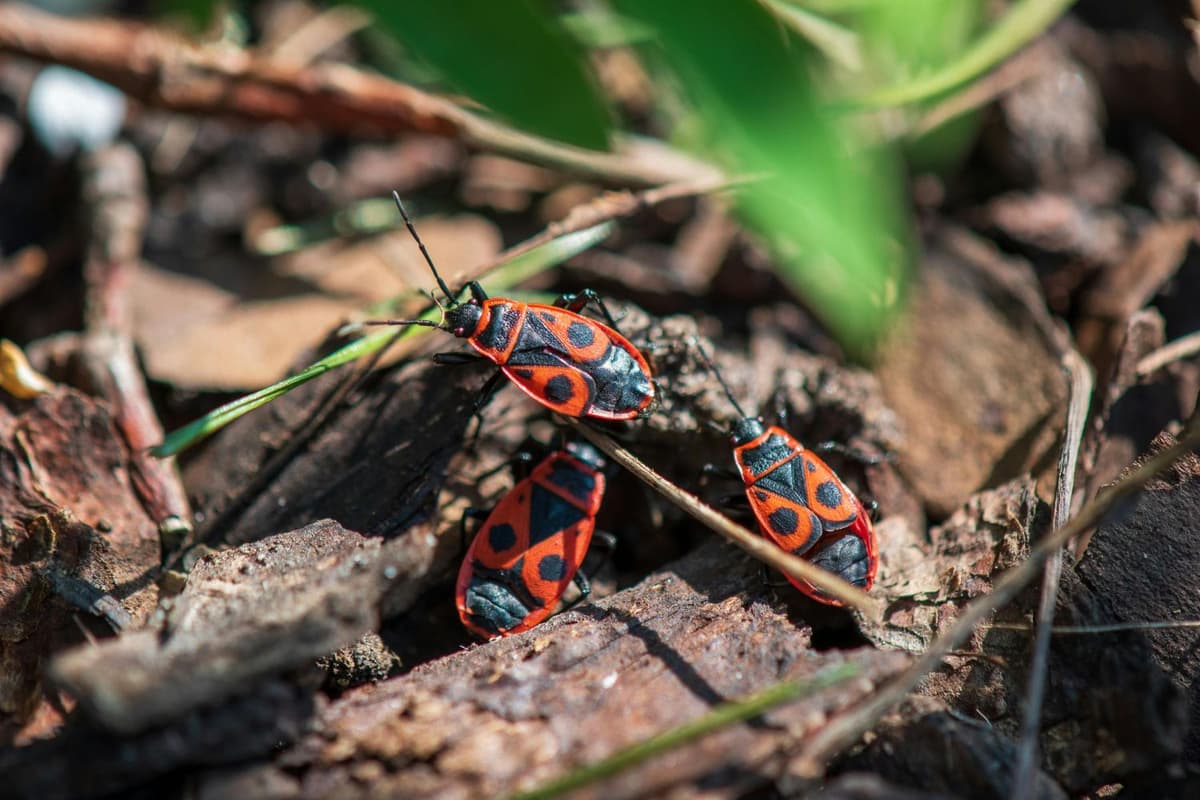
Close-up of a Firebug beetle on the forest floor.
Natural Predators of Beetles
Beetles face many predators across life stages. Birds are major hunters, including sparrows, robins, woodpeckers, and thrushes that target both adults and larvae. Small mammals like shrews, mice, weasels, badgers, and moles dig up larvae in soil.
Other insects prey on beetles: predatory ground beetles, tiger beetles, ants, mantises, and carrion beetles hunt them. Spiders ambush or pursue beetles, while soldier beetles capture them actively. Amphibians such as frogs and toads eat beetles, though some Epomis larvae reverse roles by preying on amphibian tadpoles. Parasitic wasps and tachinid flies lay eggs on beetles; their larvae develop inside the host. Larger animals like hedgehogs, rodents, and some reptiles also consume beetles in natural settings.
Beetle Habit and Behavior
Beetles display a wide range of lifestyles and behaviors adapted to their diverse roles in ecosystems. Most species live solitary lives, but some, such as passalid beetles, show social behavior by cooperating to care for young. Defense strategies include thanatosis (playing dead) to deter predators; in dung beetles, bolder individuals are less likely to feign death and remain more active.
Feeding behaviors vary greatly: some consume plants, decaying wood, or carrion, while others are active predators hunting other insects. Males of horned species, like stag beetles, use large mandibles or horns to compete fiercely for mates during breeding season. Beetles move with remarkable flexibility, they run quickly on the ground, fly long distances to find food, dig burrows, or swim using flattened legs and trapped air under elytra.
Activity patterns differ by species: most are nocturnal (often larger and darker), while diurnal beetles tend to have brighter colors. In tropical forests, nocturnal species dominate dung beetles, whereas leaf beetles are typically active during the day. Some species synchronize mass emergence in short periods to boost mating success.
Communication Methods in Beetles
Beetles primarily communicate using chemical signals. Pheromones attract mates, warn of danger, and help locate others over long distances. Some species produce sounds or vibrations through stridulation, rubbing elytra or legs together, for courtship, rivalry, or defense, especially common in bark beetles. Fireflies (lampyrid beetles) use bioluminescent light signals to attract mates. Direct contact reveals sex or species identity via cuticular hydrocarbons on the body surface.
The elytra (hardened forewings) protect the body and folded hind wings, which unfold like a spring mechanism for flight but require significant energy. Beetles move diversely: fast ground running, long-distance flying for food search, or swimming with air bubbles trapped under the elytra.
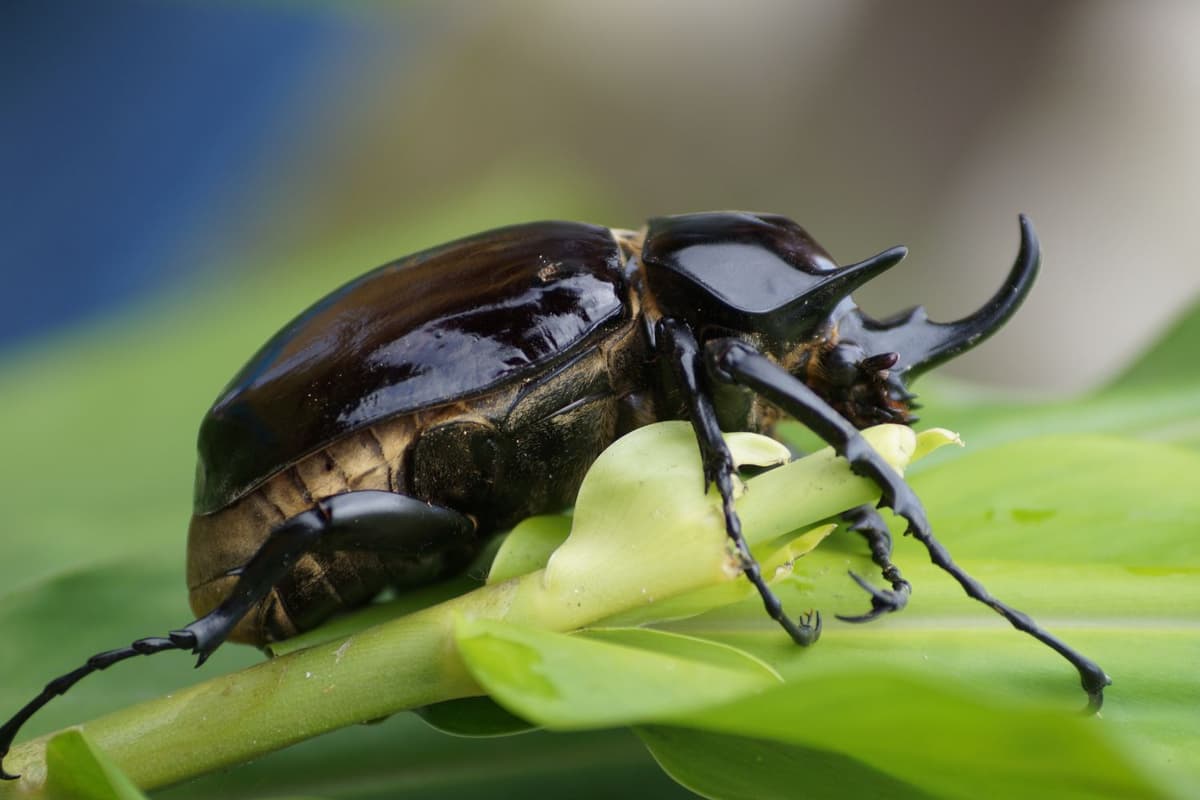
A Rhinoceros beetle clings firmly to a plant stem.
Reproduction
Beetles reproduce sexually, with males transferring sperm to females via specialized organs for egg fertilization. Mating duration varies from minutes to hours, depending on species; males rarely provide parental care afterward. Females lay dozens to hundreds of small white or yellow eggs after mating. Egg-laying habits differ widely: eggs are placed in leaf litter, decaying wood, dung, soil, or retained inside the body for live birth in some species.
In stag beetles (Lucanus cervus), males fly at dusk to locate females, fighting with large mandibles to secure mating rights. Several males surround one female. Tiger beetles often perform mate-guarding, riding on the female post-mating to block rivals. Burying beetles (Nicrophorus) exhibit advanced parental care: both parents prepare carrion, defend the resource, and regurgitate digested food to feed larvae.
Life Cycle
Beetles undergo complete metamorphosis with four distinct stages: egg, larva, pupa, and adult.
Eggs hatch in 7–10 days or longer, depending on species and environmental conditions. Larvae (grub- or worm-like) feed voraciously to store energy, molting 7–10 times or more. Larval stage lasts from weeks to years (e.g., 18–24 months in some stag beetles, 4–6 months in smaller species).
Pupae form in cocoons or chambers and undergo reorganization without eating or moving, lasting weeks to months. Adults are focused on reproduction and egg-laying, with lifespans typically short, ranging from weeks to months. Full life cycles range from months to years and are influenced by temperature, environment, and species. In some, like passalid or burying beetles, parental care, protection, feeding, and guidance improve larval survival and size.
Threats and Conservation of Beetles
Threats
Beetles face serious threats that impact their vast diversity and ecological roles. Habitat loss and fragmentation are the primary dangers, driven by deforestation, urbanization, agricultural expansion, and land-use changes. These factors reduce populations in many species by destroying breeding sites and food sources. Widespread pesticide use, especially neonicotinoids, directly harms beetles by affecting their nervous systems, reproduction, and immunity, even at low doses. Climate change alters temperature, rainfall, and seasonal patterns, disrupting ecosystems, shifting ranges, and increasing extinction risk in tropical and montane regions.
Light pollution disrupts nocturnal species’ behavior and health, while diseases add pressure. Undescribed species (about 80% in the tropics) are especially vulnerable to habitat destruction and face higher extinction risks than known species. Threats interact: habitat loss combined with climate change heightens competition and reduces food availability. For species like the American burying beetle, warmer conditions accelerate carrion decay, increasing competition from flies and ants.
Conservation
Conservation of beetles focuses on protecting primary habitats, especially old-growth and tropical forests, to maintain species diversity and ecosystem services such as decomposition and pest control. In the United States, 17 beetle species are listed as endangered or threatened under the Endangered Species Act, and over 60% of assessed species show declining trends according to IUCN data.
Efforts include captive breeding and reintroduction programs, such as for the American burying beetle, which has been successfully released in historical ranges. Reducing pesticide use, promoting insect-friendly agriculture, and planting native vegetation support local populations. Research and monitoring target undescribed tropical species to accurately assess risks and avoid underestimating environmental impacts. Protecting highland and mountain forests, combined with sustainable land management, helps mitigate climate change effects. Increasing public awareness and stronger policies are essential, given beetles’ critical roles in food chains and nutrient recycling.
Observe Beetles in Cat Tien National Park
Cat Tien National Park hosts high beetle diversity in its lowland tropical moist forests. While no complete species list exists for Coleoptera, studies and observations record tiger beetles (Cicindelinae), ground beetles (Carabidae), dung beetles (Scarabaeidae), longhorn beetles (Cerambycidae), iridescent species, and bombardier beetles.
Notable rare or impressive species include the three-horned rhinoceros beetle (Chalcosoma atlas), a large (60–120 mm) Asian scarab recorded in Cat Tien and nearby areas like Bao Loc. This species is heavily collected for trade and is considered rare in Vietnam, with proposals to include it in the Vietnam Red Data Book. Stag beetles, weevils, and other bombardier beetles are also observed, though a full endangered list for beetles in Cat Tien is incomplete. The park’s humid primary and regenerating forests, mixed evergreen stands, and riverine habitats provide ideal conditions for beetle diversity. However, beetles are vulnerable to poaching, forest loss, and insect trade. Cat Tien’s strong protection helps maintain populations.
Katien Ranger Patrol partners with Cat Tien National Park management to offer small-group, low-impact night tours and wildlife experiences. These guided safaris focus on nocturnal insects and other animals, increasing the chances of spotting beetles such as tiger beetles, bombardier beetles, and large scarabs while minimizing disturbance.
- Best times are dusk to night (5–10 p.m.) or early morning (5–7 a.m.), when many species are active. Night safaris offer the highest success.
- Look for shiny elytra, quick movements on trails or leaves, or glowing fireflies.
- Beetles often hide under bark, in dung, or on decaying wood; scan tree trunks, leaf litter, and river edges.
Interesting Facts about Beetles
- Beetles are the most diverse group of animals. Over 400,000 described species exist, about 25% of all known animals and nearly 40% of insects.
- Bombardier beetles shoot boiling spray. When threatened, they mix chemicals to create a near-100°C blast from their abdomen, deterring predators.
- Hercules beetles lift incredible weights. Males can carry up to 850 times their body weight, equivalent to a human lifting around 80 tons. Their huge horns are for fighting rivals, not lifting.
- Fireflies (Lampyridae family) are beetles, not flies. They produce light through a chemical reaction in their abdomen to attract mates, and some species flash in perfect sync.
- Some beetles survive freezing. Certain alpine and arctic species produce antifreeze proteins, allowing them to freeze solid in winter and thaw alive in spring.
Reference
- Harris, J. E., Rodenhouse, N. L., & Holmes, R. T. (2019). Decline in beetle abundance and diversity in an intact temperate forest linked to climate warming. Biological Conservation, 240, 108219. https://doi.org/10.1016/j.biocon.2019.108219
- McKenna, D. D., & Farrell, B. D. (2009). Beetles (Coleoptera). In S. B. Hedges & S. Kumar (Eds.), The timetree of life (pp. 278–289). Oxford University Press.
- Willi. (2023, May 23). Scarab beetles and their meaning in the ancient Egyptian history. Natural History Curiosities.