Deep within the tropical forests of Southeast Asia, the ferret badger (Melogale spp.) lives quietly and is often overlooked. Although it belongs to the weasel family, this small mammal shows a mix of ferret-like and badger-like features.
It is nocturnal, secretive, and rarely seen by people, which makes it almost invisible in the wild. Because of this hidden lifestyle, the ferret badger remains one of the least understood small carnivores in forest ecosystems.
In Vietnam, scientific attention to ferret badgers increased only after the discovery of a new species in Cuc Phuong National Park in 2011. This finding highlighted how little was known about the group and revealed that Vietnam is an important area for ferret badger diversity. In the following sections, Katien Safari take a closer look at ferret badgers, including their physical characteristics, distribution, behavior, and why they matter in forest conservation.
| Common name | Ferret Badger |
|---|
| Scientific name | Melogale spp. |
|---|
| Taxonomy |
Kingdom: Animalia
Phylum: Chordata
Class: Mammalia
Order: Carnivora
Family: Mustelidae
|
| Weight / Size | Body length: 33–44 cm. Tail length: 15–23 cm. Weight: 1–3 kg. |
|---|
| Lifespan | Wild: unknown (likely under 10 years). Captive: 10–15+ years. |
|---|
| Population | Exact numbers unknown. |
|---|
| Habitat | Tropical and subtropical forests, evergreen and secondary forests, limestone karst areas; mainly terrestrial and nocturnal. |
|---|
| Range | South and Southeast Asia, including China, India, Nepal, Myanmar, Thailand, Laos, Cambodia, Vietnam, and parts of Indonesia and Taiwan. |
|---|
| Diet | Omnivorous – mainly insects, earthworms, snails, and other invertebrates; also small vertebrates, eggs, fruits, and carrion. |
|---|
| Conservation status | Varies by species: Endangered (e.g. M. everetti), Least Concern (most species), Data Deficient (M. cucphuongensis). |
|---|
Physical Characteristics of the Ferret Badger
Ferret badgers belong to the family Mustelidae and show a distinctive body form that combines traits of both ferrets and badgers. Their bodies are elongated but sturdy, built low to the ground, which allows them to move efficiently through dense undergrowth and forest floors. They are classified as small carnivorous mammals, with an average body weight ranging from 1–3 kg. The head–body length is typically 33–44 cm, while the tail measures 15–23 cm and is noticeably bushy and prominent.
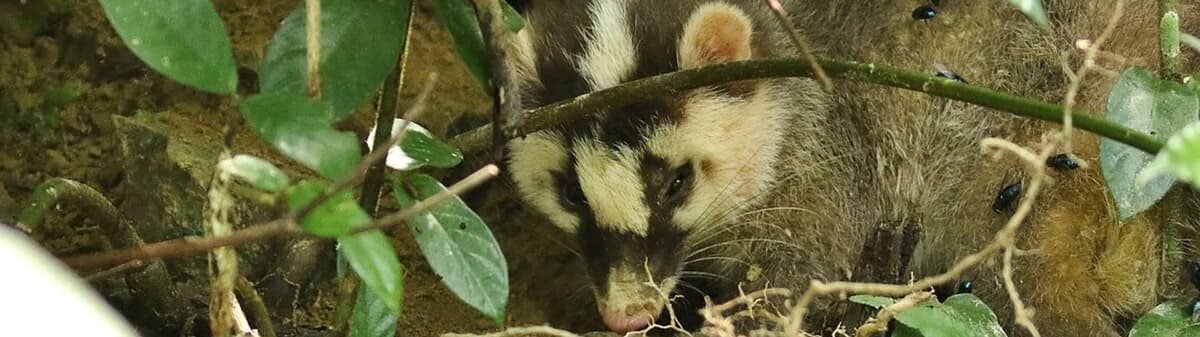
One of the most recognizable features of ferret badgers is their facial pattern. The face displays strong color contrasts that resemble a “mask,” making it easy to distinguish from other small mammals. Most of the face is covered in dark brown or black fur around the eyes and nose, while white or pale yellow patches appear on the forehead, cheeks, and near the ears. The exact shape and clarity of these white markings vary among species and even between individuals, with some species showing very clear white cheeks and others having faint or nearly absent markings.
The snout is narrow, elongated, and slightly pointed. The bare nose tip, or rhinarium, is clearly visible and sometimes slightly curved or wedge-shaped, an adaptation that supports their strong sense of smell and their habit of digging for food. The fur on the back is usually gray-brown, dark brown, or almost black. In some species, lighter tips on the hairs create a subtle silvery or speckled appearance.
The underside of the body, including the chest and belly, is lighter in color, ranging from cream and white to pale brown or light orange. Many ferret badgers have a white stripe running from the top of the head down the back, with length varying from short to nearly reaching the base of the tail. Their feet are broad, with 5 toes on each foot. The claws are long and curved, well-suited for digging and foraging. The foot pads have folds and partial webbing, allowing the animals to move effectively on moist ground and climb when needed.
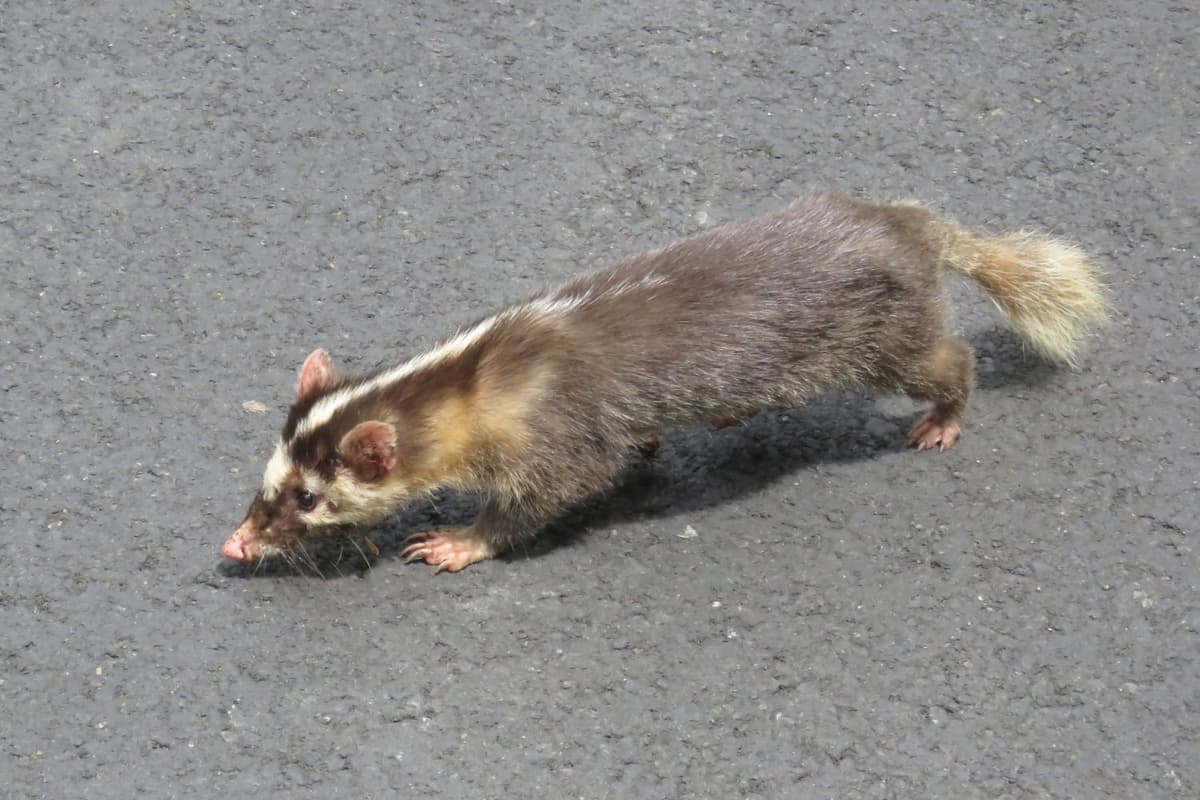
The Ferret Badger has a masked face and sleek body.
Species of Ferret Badger
There are 3 recognized species of ferret badger in the genus Melogale:
- The Chinese Ferret Badger (Melogale moschata), also called the Small-toothed Ferret Badger, is divided into 6 subspecies: M. m. moschata, M. m. ferreogrisea, M. m. taxilla, M. m. hainanensis, M. m. millsi, and M. m. sorella.
- The Burmese or Large-toothed Ferret Badger (Melogale personata) has 3 subspecies. M. p. personata occurs in northeastern India, Bangladesh, southern Myanmar, and Thailand. M. p. nipalensis is found in Nepal, and M. p. pierrei occurs in Cambodia, southern China, Laos, and Vietnam.
- In Vietnam, the Cuc Phuong Ferret Badger (Melogale cucphuongensis) is a recently described species, first identified in 2011, and currently includes 2 subspecies. M. c. cucphuongensis is known from Cuc Phuong National Park in Vietnam, while M. c. guadunensis, described in 2019, occurs in the Wuyishan Mountains of Fujian, China.
Habitat and Distribution
Ferret badgers of the genus Melogale are small carnivores native mainly to Indochina, southern China, Java, Bali, and northeastern Borneo. They occupy a wide range of habitats but are most strongly associated with forested environments.
Habitat
They commonly live in tropical and subtropical forests, forested hillsides, and grassy areas with dense vegetation. Although they are capable diggers, ferret badgers usually use burrows made by other animals rather than creating their own.
They can be found in primary forests, secondary forests, and sometimes in more open habitats. Ferret badgers are nocturnal and largely terrestrial, spending most of their active time on the ground while searching for food such as insects, earthworms, small vertebrates, and fruit.
Distribution in Asia
Across Asia, ferret badgers have a broad but uneven distribution. They occur throughout South and Southeast Asia, from mainland regions to tropical islands. Confirmed records exist from northeastern India, Nepal, Bangladesh, Myanmar, Thailand, Laos, Cambodia, Vietnam, and China.
Some species are restricted to islands such as Java, Bali, Borneo, and Taiwan, where they show narrow ranges and high levels of endemism. In mainland Southeast Asia and southern China, the ranges of several species overlap, especially within Indochina.
Ferret Badger Distribution in Vietnam
Vietnam is home to 3 confirmed ferret badger species in the genus Melogale. The Vietnam Ferret Badger (Melogale cucphuongensis) is endemic to Vietnam, mainly found in limestone karst and evergreen forests of the north. It is recorded from Cuc Phuong National Park and genetic evidence from provinces such as Lang Son, Ha Giang, and Cao Bang.
The Small-toothed Ferret Badger (Melogale moschata) occurs widely in northern and central Vietnam, with some records extending into the south. The Large-toothed Ferret Badger (Melogale personata) has the widest range, distributed from southern and central Vietnam to the north. All 3 species have overlapping distributions and are often difficult to distinguish without genetic analysis.
Ferret Badger in Cat Tien National Park
Confirmed records show that ferret badgers are present in Cat Tien National Park in southern Vietnam, although the exact population size is still unknown. The species identified in the park is the Large-toothed Ferret Badger (Melogale personata).
Within the park, this species lives in protected forest areas that provide suitable cover and food resources. Ferret badgers in Cat Tien are nocturnal and ground-dwelling. They are sometimes observed during night safaris and biodiversity surveys conducted in the park. Their diet in this ecosystem includes insects, small vertebrates, and fruit, reflecting their flexible feeding behavior.
Diet and Predators
Ferret Badger Diet
Ferret badgers are omnivorous, but their diet is dominated by insects and ground-dwelling invertebrates. Common food items include earthworms, cockroaches, grasshoppers, beetles, and snails. Some species have particularly strong teeth that allow them to crush hard shells, such as those of snails and beetles.
They also prey on small vertebrates, including frogs, lizards, young rodents, small birds, and bird eggs. Fruit and carrion are eaten as well, showing a high level of dietary adaptability. In some areas, ferret badgers live close to human settlements and can help control insect and rodent populations.
Predators and Defense
Natural predators of ferret badgers are not well documented, but they may be preyed upon by larger carnivores. Humans and hunting dogs represent significant threats through hunting and snaring.
When threatened, ferret badgers rely on several defense mechanisms. They can release a strong, unpleasant odor from their scent glands, a trait common to mustelids. They may also become very aggressive when cornered. The contrasting white facial markings and white dorsal stripe are thought to function as warning coloration, signaling their defensive abilities to potential predators.
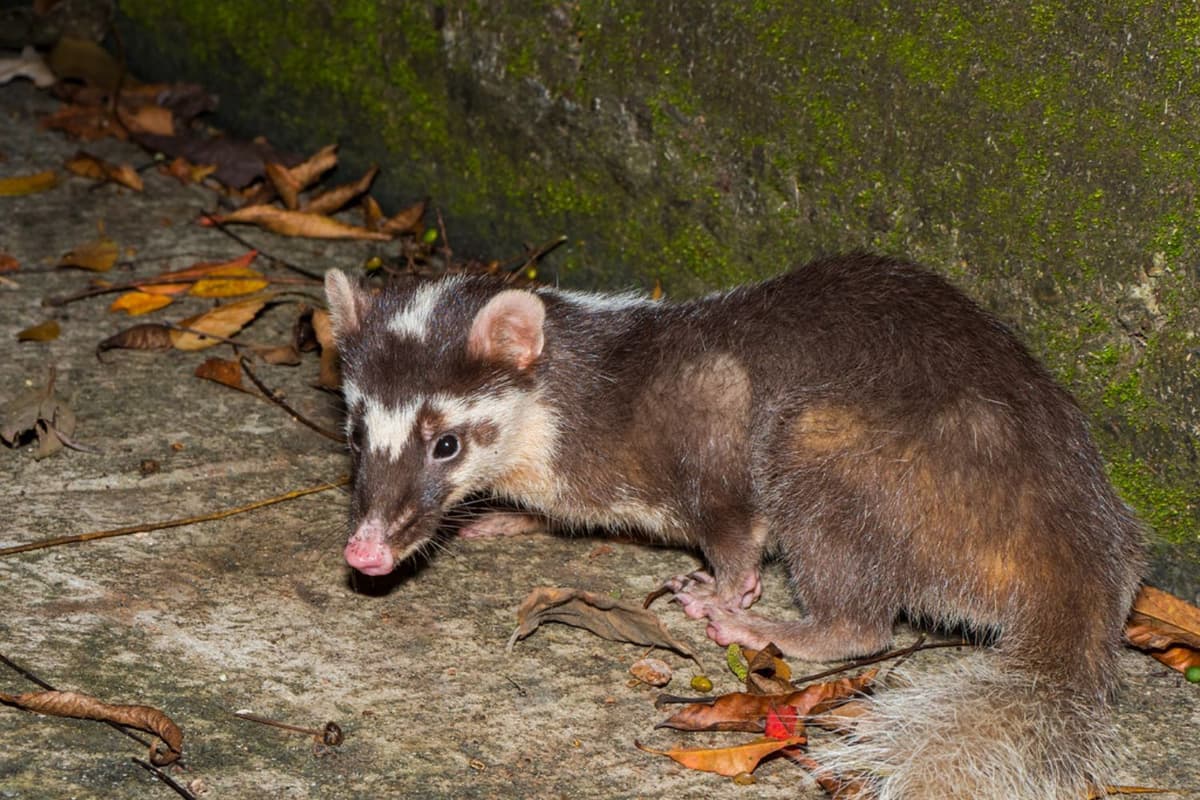
It lives in forests, digging burrows and foraging at night.
Reproduction and Life Cycle of Ferret Badger
The breeding season of ferret badgers varies by species and region but generally occurs in spring to early rainy season. Some species may breed year-round, while males often show seasonal reproductive pauses. Mating usually takes place several months before birth, ensuring that young are born when environmental conditions are most favorable.
The gestation period lasts about 2–3 months, with no evidence of delayed implantation. Litters typically consist of 1–5 young, most commonly 2–3, and most species produce only one litter per year. Females usually give birth in existing burrows made by other animals. The young are nursed and protected by the mother during early life.
Juveniles are weaned and begin to live independently after about 2–3 months. Data on lifespan in the wild are limited, but in captivity ferret badgers can live 10–15+ years, depending on the species. Some species, including the Cuc Phuong Ferret Badger, remain poorly studied, though their reproductive traits are thought to be similar to related species.
Threats and Conservation
Threats
Ferret badgers face several threats across their range. Habitat loss and fragmentation caused by forest conversion, agriculture, road construction, and infrastructure development reduce and isolate suitable environments. Climate change poses an additional risk, especially to species living in mountainous regions.
Hunting and wildlife trade are also major threats, with wire snares commonly used in Southeast Asia leading to silent population declines. Indirect human impacts are increasingly important. Road traffic causes significant mortality in some regions, while hunting dogs and human–wildlife conflict further increase survival pressure. Disease is another concern, as ferret badgers are natural hosts of rabies virus, particularly in China and Taiwan.
Conservation Status
The Borneo Ferret Badger (Melogale everetti) is classified as Endangered due to its very restricted range, fragmented habitat, and sensitivity to climate change.
Most other species, including the Burmese Ferret Badger (M. personata), Chinese Ferret Badger (M. moschata), and Javan Ferret Badger (M. orientalis), are listed as Least Concern because of wider distributions and some adaptability.
The Cuc Phuong Ferret Badger (M. cucphuongensis) is classified as Data Deficient, as it was only recently discovered and scientific data remain limited.
The Taiwan Ferret Badger (M. subaurantiaca) has not yet been officially assessed by the IUCN.
Conversation Effort
There are currently few conservation projects dedicated specifically to ferret badgers. Most protection occurs indirectly through forest conservation programs, protected area management, and studies of small carnivores. In Borneo, habitat connectivity projects linking Kinabalu National Park and Crocker Range play a key role in protecting the Endangered Borneo Ferret Badger.
In Indochina, including Vietnam and Laos, ferret badgers are documented through rescue activities, camera-trap surveys, and law enforcement, which has led to new species discoveries and reduced hunting pressure. In China, research on rabies vaccination in ferret badgers aims to protect public health while also helping stabilize wild populations.
See Ferret Badger in Cat Tien National Park
In Cat Tien National Park, the species confirmed to occur is the Large-toothed Ferret Badger (Melogale personata), which inhabits protected forest areas within the park. The exact number of individuals is currently unknown, as there has been no comprehensive population survey for this species in Cat Tien. The ferret badger is nocturnal and mainly terrestrial, feeding on insects, small vertebrates, and fruits within the forest ecosystem.
At present, Katien Ranger Patrol is working closely with the management board of Cat Tien National Park to organize small-group safari tours that focus on responsible and low-impact wildlife observation. Sightings of ferret badgers are unpredictable and occur randomly, depending on factors such as time, weather, and animal activity. There are no fixed locations where the species is guaranteed to appear.
However, with patience and a bit of luck, visitors on night safaris may encounter this species, along with civets and mongooses. Even though ferret badgers are not as famous as large mammals or primates, their occasional appearance adds meaningful value to the nocturnal wildlife experience in Cat Tien.
5 Interesting Facts about Ferret Badger
- Like human fingerprints, the black-and-white facial patterns of ferret badgers are unique, and no two individuals have exactly the same “mask.”
- Unlike true badgers that mostly live underground, ferret badgers are very good climbers.
- Most ferret badgers do not dig their own burrows but use abandoned burrows of other animals or natural rock crevices to rest during the day.
- In China and Taiwan, ferret badgers, especially Chinese and Formosan species, are natural hosts of the rabies virus and can maintain transmission cycles without dogs.
- Unlike many other mustelids, ferret badger mothers may nurse their young until they are close to adulthood.
Reference
- Akhter, T., Tabassum, N., & Hasan, S. (2024). Observations of Large-Toothed Ferret Badger (Melogale Personata) in Patharia Hill Reserve Forest at Northeast Bangladesh. Bangladesh Journal of Zoology, 52(2), 271–275.
- Boonratana, R. (2010). Sighting of the Bornean Ferret Badger Melogale everetti in the Kinabatangan floodplains, and implications of its lowland distribution. Small Carnivore Conservation, 42, 22–24.
- Coudrat, C. N. Z., & Nanthavong, C. (2013). A confirmed record of Large-toothed Ferret Badger Melogale personata from central Laos suggesting syntopy with Small-toothed Ferret Badger M. moschata. Association Anoulak.
- Li, S., Yu, G.-H., Liu, S., & Jin, C.-S. (2019). First record of the ferret-badger Melogale cucphuongensis Nadler et al., 2011, with description of a new subspecies, in southeastern China. Zoological Research, 40(6), 575–579. https://doi.org/10.24272/j.issn.2095-8137.2019.067
- Miao, F., et al. (2022). Genetic Diversity, Evolutionary Dynamics, and Pathogenicity of Ferret Badger Rabies Virus Variants in Mainland China, 2008–2018. Frontiers in Microbiology, 13, 929202. https://doi.org/10.3389/fmicb.2022.929202
- Pei, K., & Wang, Y. (1995). Some Observations on the Reproduction of the Taiwan Ferret Badger (Melogale moschata subaurantiaca) in Southern Taiwan. Zoological Studies, 34(2), 88–95.
- Robichaud, W. G. (2010). A field record of Small-toothed Ferret Badger Melogale moschata in Central Laos, and other recent records of ferret badgers from the country. Small Carnivore Conservation, 42, 32–34.
- Schank, C., et al. (2009). First confirmed records of Large-toothed Ferret Badger Melogale personata in Cambodia, with notes on country records of Melogale. Small Carnivore Conservation, 40, 11–15.
- Thapa, S., & Dahal, D. R. (2024). The craniodental structure of a Large-toothed Ferret Badger Melogale personata from Nepal.
- Wilianto, E., & Wibisono, H. T. (2016). A revised global conservation assessment of the Javan Ferret Badger Melogale orientalis. Small Carnivore Conservation, 55, 75–82.