With fewer than 1,000 individuals left on the entire planet, the White-shouldered Ibis (Pseudibis davisoni) is one of the rarest birds in the world. Once found across Southeast Asia, this unique bird is now fighting for survival in its last strongholds in Cambodia and Vietnam. Known for its striking blue-black feathers and the famous white wing patch, this species is a true hidden gem of the tropical lowlands. In this guide, we explore the secret life, habitat, and conservation efforts of this Critically Endangered species.
Let’s discover why saving this bird is vital for our ecosystem.
| Common Name | White-shouldered Ibis |
|---|
| Scientific Name | Pseudibis davisoni |
|---|
| Taxonomy |
Kingdom: Animalia
Phylum: Chordata
Class: Aves
Order: Pelecaniformes
Family: Threskiornithidae
|
| Size | 60–85 cm in height; Wingspan approx. 419 mm |
|---|
| Lifespan | Not precisely recorded (Related ibis species live 15–20 years) |
|---|
| Habitat | Dry dipterocarp forests, seasonal wetlands (trapaengs), and lowland riverbanks |
|---|
| Range | Mainly Cambodia (85-95%), Southern Vietnam, Southern Laos, and East Kalimantan (Indonesia) |
|---|
| Diet | Carnivorous; earthworms, mole crickets, frogs, eels, and small fish |
|---|
| Conservation Status | Critically Endangered (CR) |
|---|
The Appearance of the White-shouldered Ibis
The White-shouldered Ibis is a large and impressive bird, standing between 60 cm and 85 cm tall. It has a strong body with long legs and a long neck. While males and females look similar, males are usually slightly larger with longer bills. Its tail is short and curves downward, which distinguishes it from its close relatives.
Adults are mostly covered in dark brownish-black feathers. Their wings and tails show a beautiful glossy blue-black color. The most famous feature is the "white shoulder", a bright white patch on the inner upper wing. When the bird is resting, this patch looks like a thin white line, but it becomes very large and visible when the bird flies.
The head of an adult is mostly bald and dark grey, though some have hints of blue or white. A distinct "collar" of white or pale blue skin wraps around the upper neck, being wider at the back. Their eyes are a striking orange-red, and their thick, downward-curved bills are yellowish-grey. Their long legs are usually dull red or pale pink.
Young birds look different; they have dull brown feathers and heads covered in feathers rather than being bald. Their eyes are brownish-grey, and their legs are pale yellow. As they grow, they lose their head feathers and develop the iconic colorful features of an adult.
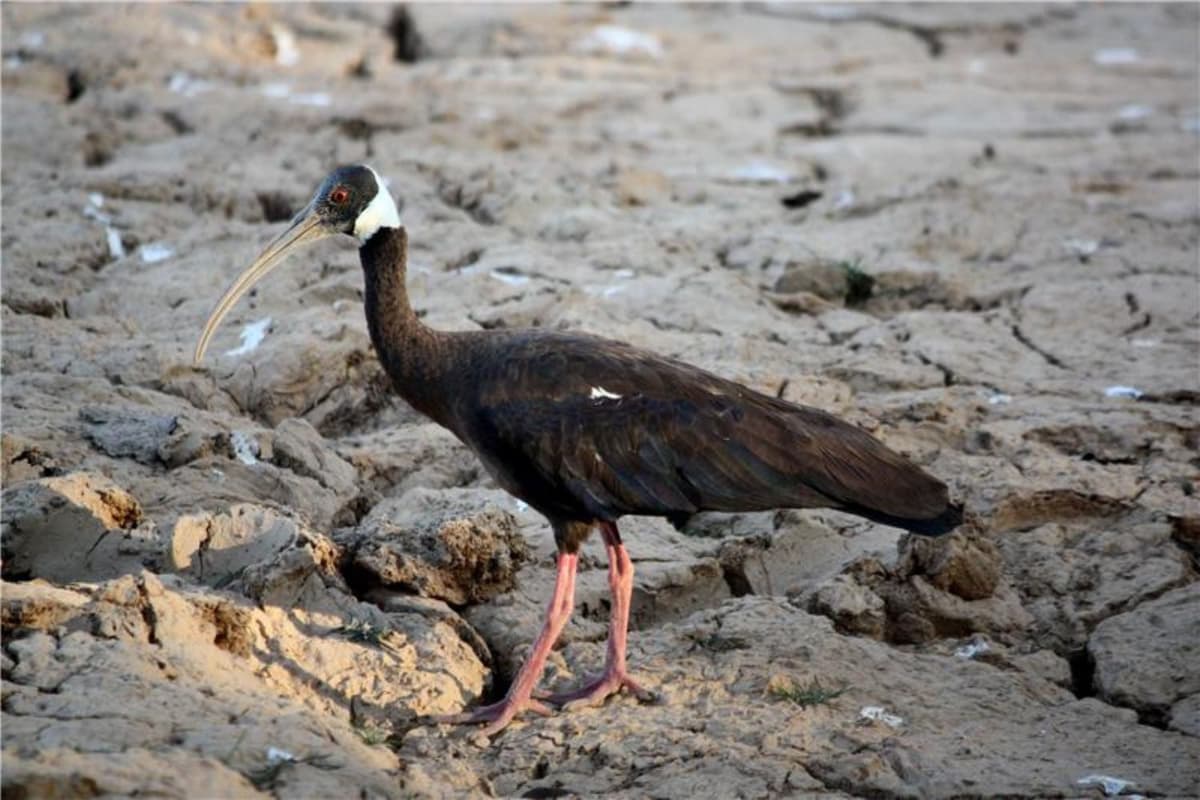
White-shouldered ibis has dark plumage with pale shoulder patches.
Habitat and Distribution of White-shouldered Ibis
Habitat of the White-shouldered Ibis
The White-shouldered Ibis is a specialist of lowland environments. It lives in a variety of landscapes including dry dipterocarp forests, shrubby grasslands, and abandoned rice fields. These birds prefer to stay near water sources such as marshes, lake edges, and riverbanks.
White-shouldered Ibis Distribution in the World
Historically, this bird lived across Southeast Asia, from Myanmar and Thailand to Vietnam and southern China. However, its modern range is now extremely small and fragmented. Today, the species is mostly restricted to northern and eastern Cambodia, southern Vietnam, southernmost Laos, and East Kalimantan in Indonesia.
It is considered functionally extinct in Thailand, Myanmar, and China. Cambodia is the final stronghold for the species, hosting between 85% and 95% of the entire global population, particularly in protected areas like Tmatboey and Lomphat.
White-shouldered Ibis in Vietnam
In Vietnam, the White-shouldered Ibis is on the brink of extinction and has disappeared from many of its former homes. In the past, scientists recorded these birds in provinces like Binh Phuoc, Dong Nai, and Gia Lai. While the species is largely gone as a breeding resident in the Mekong Delta, a few sightings occurred in the late 1990s. For example, two individuals were seen in the seasonal grasslands and harvested rice fields of Kien Giang in 1999. Despite these rare sightings, the population remains critically low and unstable within the country.
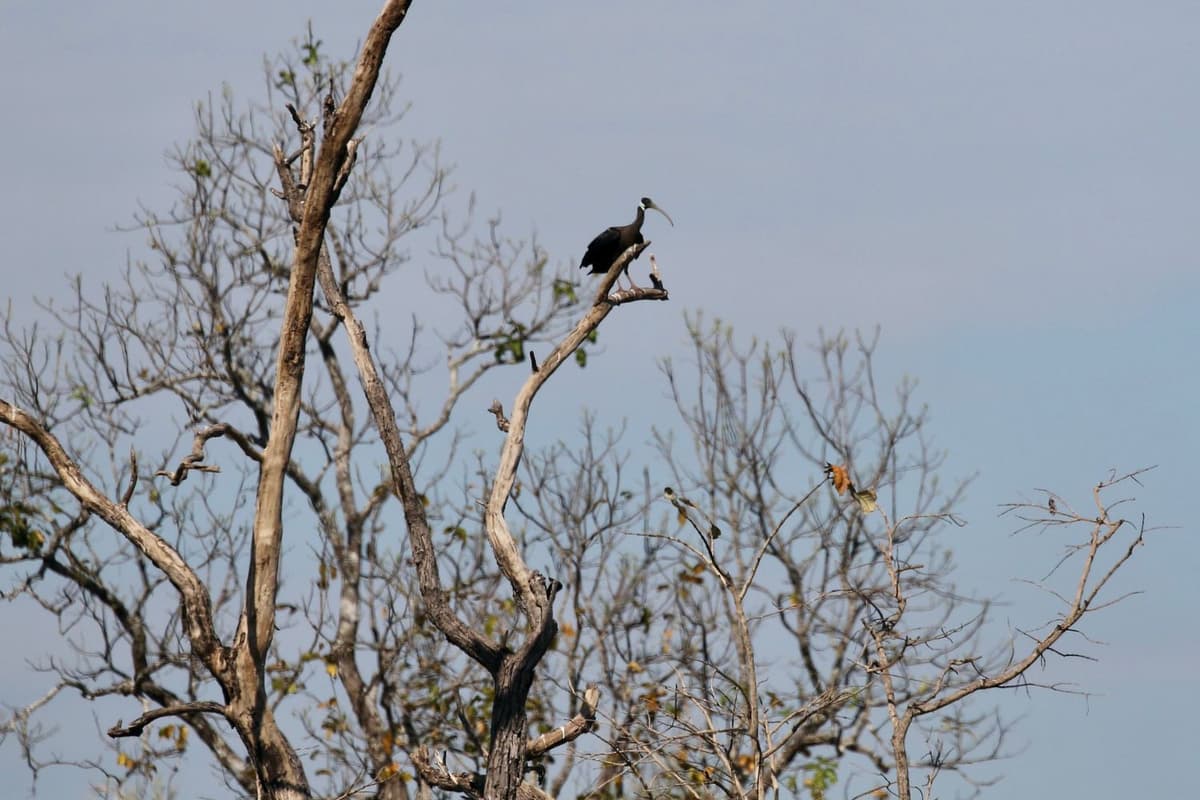
It lives in dry forests and wetlands across Southeast Asia.
White-shouldered Ibis in Cat Tien National Park
Cat Tien National Park was once one of the last places in Vietnam where this rare ibis could be found. The birds used to forage near marshes and bamboo-covered hills, specifically around the Bau Beo swampland. They often perched on tall, dead trees along riverbanks to rest. Records from 1991 to 1992 showed only 3 individuals living in the park. Unfortunately, because there have been no confirmed sightings for a very long time, recent bird lists for Cat Tien National Park have proposed removing the White-shouldered Ibis from their official records.
Diet and Predators of White-shouldered Ibis
The White-shouldered Ibis mainly eats small invertebrates like earthworms, mole crickets, leeches, and beetle larvae. Amphibians, especially field frogs and paddy frogs, are their favorite meals in dry areas. They also consume eels, small fish, and occasionally fallen fruits found on mudflats.
Foraging Behavior
These birds hunt on land, such as dry forest floors or rice fields, rather than open water. They use three main methods: probing their bills through mud, pecking at the surface, and flipping stones to find hidden prey. Their curved bills are perfect for reaching into deep cracks in dry mud. After catching a meal, they often swing their heads to clean off dirt before swallowing.
Natural Predators and Food Chain
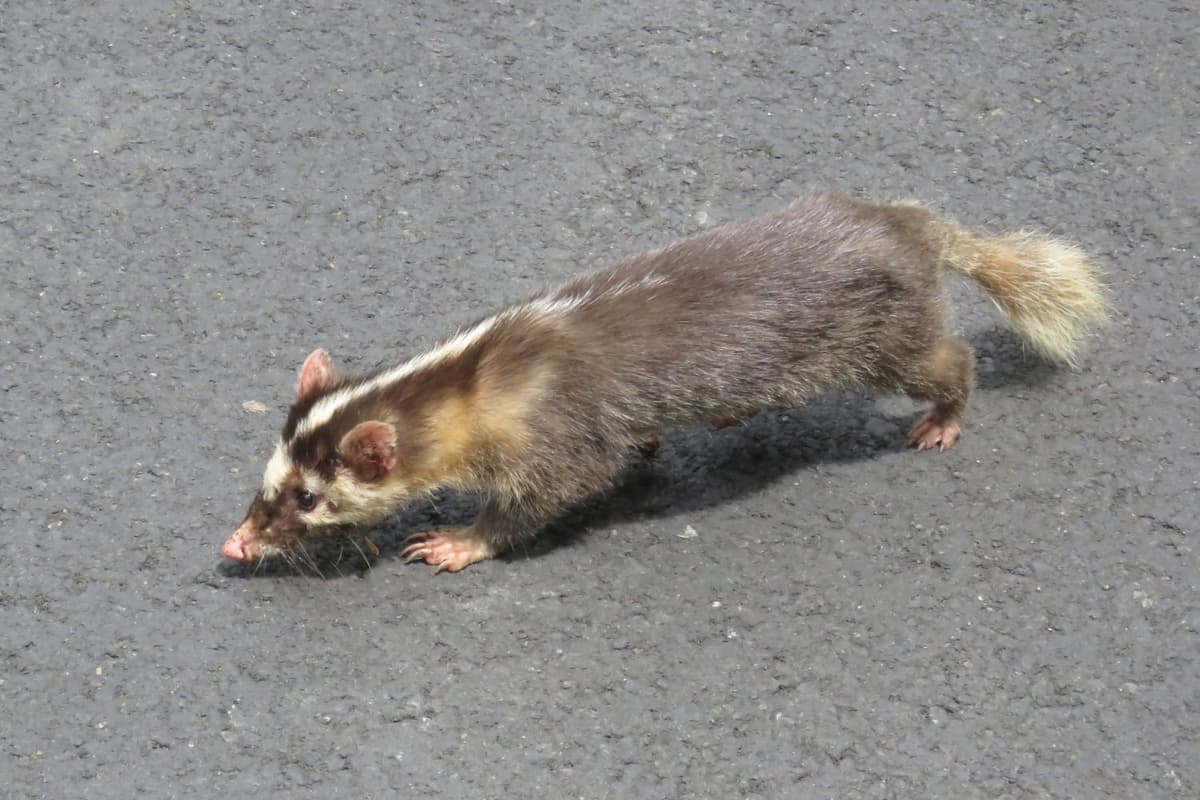
The eggs and chicks of the White-shouldered Ibis face several dangerous enemies in the wild. The Large-billed Crow is a major threat, as it can steal entire clutches of eggs or eat newly hatched chicks when the parents are away. Small carnivores like civets and the yellow-throated marten also raid their nests. Additionally, in areas near human sightings, domestic dogs are significant predators that threaten nests and birds living near riverbanks.
The White-shouldered Ibis acts as a secondary consumer, helping to balance the population of insects, invertebrates, and small amphibians in its ecosystem. At the same time, its eggs and young serve as a food source for larger birds and small mammals.
Interestingly, because their curved bills are so efficient at finding food, they are often victims of kleptoparasitism. Other straight-billed birds, like Cattle Egrets or Chinese Pond Herons, frequently follow them to steal the prey they have worked hard to uncover.
Behavior and Social Habits of the White-shouldered Ibis
The White-shouldered Ibis has unique social behaviors that change with the seasons. During the dry breeding season, they are usually solitary, stay in pairs, or live in small family groups. However, during the rainy non-breeding season, they become very social. They gather in large flocks to forage and sleep together in trees. These groups can range from a few dozen to several hundred birds, with some sightings of over 500 individuals in shallow water areas.
These birds spend a lot of time preening their feathers using their bills and the back of their heads. They enjoy sunbathing on mudflats or gravel by spreading their wings into a triangle shape to catch the heat. To stay cool while sunning, they often drink water or vibrate their throats with open bills.
Relationship with Humans and Movement
An interesting trait of this species is its synanthropic nature, meaning it benefits from living near traditional human farming. Activities like cattle grazing help flatten vegetation and create small pools, which are perfect for the ibis to find food. While they do not migrate long distances, they perform short trips (over 5 km) between roosting trees and feeding grounds. They also move along large rivers as water levels change or relocate if forest fires occur.
Calls and Vocalizations
The voice of the White-shouldered Ibis is loud, wild, and often described as "eerie screams." When defending territory or communicating with the flock, they make hoarse, long sounds like "errrrh" or "errrrrroh." They also produce goose-like shrieks such as "errrrh owk owk..." or deeper tones like "ohhaaa." During mating, they make a sharp, loud "klioh klioh" sound, which is very similar to the call of a Black Woodpecker.
Daily Activity
This ibis is a diurnal bird, meaning it is active during the day. They spend daylight hours foraging, sunbathing, and preening. At night, they gather to roost in large trees along rivers or inside the forest. While the female spends most of the day sitting on the nest, the process of incubating eggs continues both day and night to keep the future chicks safe.
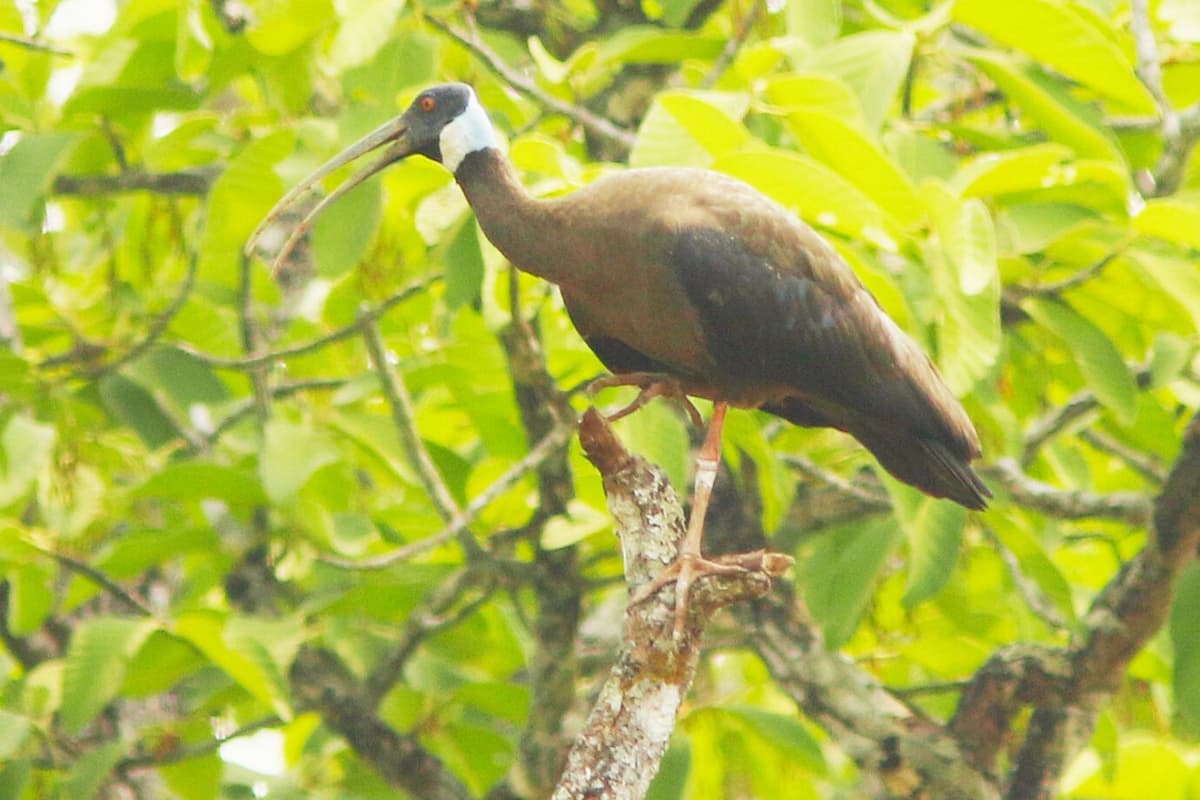
This rare ibis often forages near forest edges.
Reproduction of the White-shouldered Ibis
The White-shouldered Ibis is a solitary breeder, meaning pairs nest alone rather than in large colonies. In Cambodia, the breeding season occurs during the dry season, from December to April. This timing is strategic: as water levels drop in seasonal pools, high densities of amphibians become trapped in the mud cracks, providing an abundant food source. In other regions, the timing varies slightly, such as February to March in Myanmar and August to December in Borneo.
Nesting Habits
These birds build very large nests high above the ground, typically at heights of 10 to 25 meters, though some are found as high as 40 meters. They prefer tall trees like dipterocarps or Koompassia, usually located near open water. Both parents work together to build the nest using twigs and fresh leaves, often adding new materials throughout the season. They are known to reuse the same nest for several years or take over abandoned nests from birds of prey.
Chick Development and Parental Care
A female typically lays 2 to 4 pale blue eggs. These eggs do not hatch at the same time. The incubation period lasts between 28 and 31 days, a task primarily handled by the female. During this month-long wait, the parents must remain vigilant against predators.
Chicks look quite different from adults; they have dull brown feathers, brownish-grey eyes, and a tuft of brown feathers on their pale blue napes. Their legs are pale yellow with dull white feet. Both parents share the duty of feeding the hungry chicks. Raising young requires a massive amount of food; a single pair in Cambodia can consume nearly two-thirds of the total amphibian biomass in a seasonal pool during one breeding season. This forces the parents to travel far to find enough prey.
Life Cycle and Survival
Chicks usually take 26 to 40 days to fledge (grow enough feathers to leave the nest). Once the breeding season ends and the rainy season begins (July to October), their lifestyle shifts completely. They leave their solitary territories to form large flocks, sometimes up to 185 birds, to forage and roost together until the next breeding cycle begins.
Threats and Conservation
Conservation Status
The White-shouldered Ibis is currently classified as Critically Endangered (CR) by the International Union for Conservation of Nature (IUCN). This is due to a severe decline in its population and the continuous shrinking of its natural habitat. In Vietnam, the species was listed as "Vulnerable" in the Red Data Book during the 1990s and 2000s and is strictly protected under Group IB regulations, which ban all hunting and trading.
Major Threats to Survival
One of the primary reasons for its endangerment is the loss and degradation of habitat. Large areas of wetlands are being converted into agricultural land, while economic land concessions, hydropower dams, and infrastructure projects have significantly reduced the bird's living space. In regions like Kalimantan, deforestation, logging, and forest fires are also major threats that destroy nesting and feeding grounds.
Changes in traditional farming have also negatively affected the ibis. These birds rely on large hoofed animals, like wild or domestic cattle, to trample vegetation and create the shallow pools they need for feeding. The shift toward modern mechanized farming and the disappearance of wild cattle have destroyed many of these essential foraging spots. Furthermore, human activities such as egg theft, hunting chicks for food, and destructive fishing methods like using electricity or poison have depleted their food sources. Natural predators, including Large-billed Crows, civets, and yellow-throated martens, also frequently attack their nests.
Birdwatching at Cat Tien National Park
Cat Tien National Park is widely regarded as one of the best birding destinations in Asia. As a vital lowland bird area in Southern Vietnam, it is home to over 348 species, representing more than one-third of the country’s total bird population. Its proximity to Ho Chi Minh City and well-developed infrastructure make it a top choice for international travelers and wildlife enthusiasts.
The park is a sanctuary for rare and endemic species. Visitors can go in search of the Germain’s Peacock-pheasant, Orange-necked Partridge, and the Siamese Fireback. While some rare waterbirds like the White-shouldered Ibis have become harder to spot in recent years, the forest remains alive with vibrant colors from: Bar-bellied, Blue-rumped Pittas, Black-and-red and Dusky Broadbills.
When to visit
- Dry season (December – May): The peak time for birding. The trails are clear, and many birds display their most brilliant plumage during the breeding season.
- Rainy season (June – October): Early rains (June–July) are still excellent for spotting Pittas and Broadbills. The late rainy season is quieter, perfect for those who enjoy a slow-paced, peaceful forest experience.
To make the most of your trip, keep these practical tips in mind:
- Birds are most active from 5:45 AM to 10:00 AM. Early morning is the best time to hear the songs of White-rumped Shamas or the calls of Green Peafowl.
- Cat Tien offers comfortable hides overlooking water holes. These are best from October to May for seeing shy birds like the Scaly-breasted Partridge or Blue-naped Pitta up close.
- Top spots include the road to Bau Sau (Crocodile Lake), and the grasslands near the park headquarters.
- Bring binoculars (8x42 or 10x42), wear lightweight long-sleeved clothes, and maintain strict silence to avoid startling the wildlife.
- For a specialized experience, Katien Ranger Patrol offers expert-led tours designed for small groups. Our short-day itineraries are perfect for travelers who want professional guidance to navigate the dense jungle. Having a professional guide can increase your chances of spotting rare species compared to trekking alone. These tours focus on high-value sightings and provide deep insights into the park's complex ecosystem.
5 Interesting Facts about White-shouldered Ibis
- The White-shouldered Ibis catches invertebrates best in wet soil but hunts frogs more effectively on dry ground.
- This bird moves deep into dry forests during the rainy season because land-based insects are much easier to find than swimming prey.
- Protecting White-shouldered Ibis populations along rivers like the Mekong is easier because river habitats are less likely to be turned into large farms.
- Forest fires caused by El Nino destroyed the riverbanks in Kalimantan and made it very difficult for the White-shouldered Ibis to find food on gravel beds.
- The White-shouldered Ibis has no commercial value in the illegal wildlife trade even though people occasionally hunt it for food.
Reference
- Bezuijen, M. R., Timmins, R., & Seng, T. (Eds.). (2008). Biological surveys of the Mekong River between Kratie and Stung Treng towns, northeast Cambodia, 2006-2007. WWF Greater Mekong - Cambodia Country Programme, Cambodia Fisheries Administration, and Cambodia Forestry Administration.
- Imanuddin, E. S. (2001). Distribution and status White-shouldered Ibis (Pseudibis davisoni) in East Kalimantan. Conservation Leadership Programme; Biodiversity Conservation Indonesia.
- Khmer Times. (n.d.). Endangered birds: 29 white-shouldered Ibises recorded at Lomphat Wildlife Sanctuary in mid 2025. Khmer Times.
- Mundkur, T., & Langendoen, T. (2022). Report on the conservation status of migratory waterbirds of the East Asian – Australasian Flyway (1st ed.). Wetlands International & EAAFP Secretariat.
- NatureLife Cambodia. (2025, December 28). National Workshop for the White-shouldered Ibis 5-Year Conservation Action Plan.
- Wright, H. (2010, February 17). Identifying nest predators to guide the conservation of critically endangered White-shouldered Ibis. The Rufford Foundation.