Did you know that very few fish are born in the ocean, spend decades growing in rivers, and then disappear into the deep sea to reproduce and die? Freshwater eels are among the rare species with this extraordinary life cycle. Scientifically known as Anguilla spp., these eels follow a reverse migratory pattern, hatching in the open ocean before migrating inland to rivers, lakes, and wetlands, where they grow for many years. When they reach maturity, they begin a final, long-distance journey back to the ocean to spawn, completing one of the most mysterious migrations in the animal world. In this article, we explore the unique biology, behavior, and ecological importance of freshwater eels, and uncover what makes them one of nature’s most fascinating fish.
| Common Name | Freshwater eel |
|---|
| Scientific Name | Anguilla spp |
|---|
| Taxonomy |
Kingdom: Animalia
Phylum: Chordata
Class: Actinopterygii
Order: Anguilliformes
Family: Anguillidae
|
| Weigh/Size | Length 0.46–0.91 m (females larger); weight 0.5–5 kg. |
|---|
| Lifespan | Long-lived, often 50–70+ years. |
|---|
| Population | Declining globally; exact numbers unknown. |
|---|
| Habitat | Rivers, lakes, wetlands, estuaries; born in the ocean, grow in freshwater. |
|---|
| Range | Worldwide in tropical and temperate regions (Pacific, Atlantic, and Indian Oceans). |
|---|
| Diet | Carnivorous – small fish, crustaceans, aquatic animals, carrion. |
|---|
| Conservation Status | Varies by species: Critically Endangered to Near Threatened (IUCN). |
|---|
Physical Characteristics of Freshwater Eels
The size of freshwater eels varies by species and sex, with females larger than males. Female eels typically range from 0.46 to 0.91 meters in length, while males rarely exceed 0.46 meters. The common weight for these eels is between 0.5 and 5 kg, with a record in the UK of around 5 kg (11 lb 3 oz).
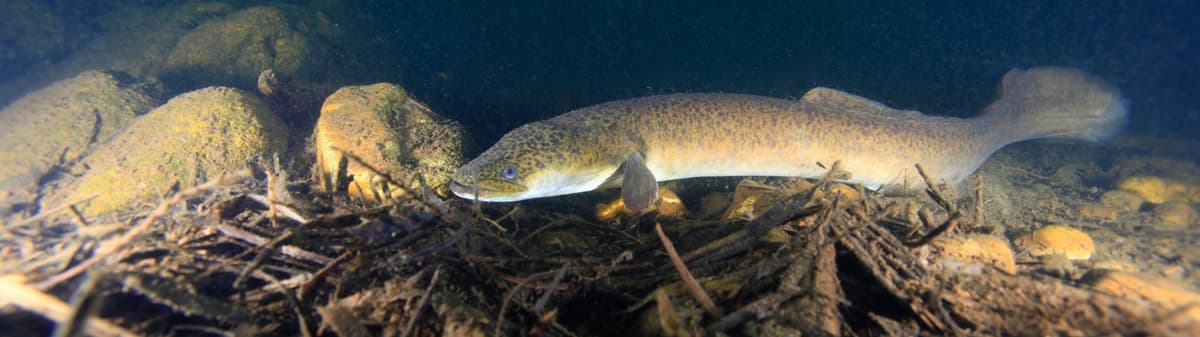
Freshwater eels have a long, cylindrical body similar to a snake, and a pointed head. Their dorsal fin, tail fin, and anal fin are fused, forming a continuous fin around the tail. They possess well-developed pectoral fins, which help them crawl along the riverbed, but lack abdominal fins. Their small, thin scales are embedded deep into the skin, giving them a smooth, scaleless appearance.
Eels have large, pointed heads, with the lower jaw longer than the upper jaw, and their teeth are small and arranged in rows. Their skin secretes a glycoprotein mucus that helps retain moisture, aids in respiration through the skin, and enhances their ability to escape and hunt. The coloration of the eel changes according to its environment, typically brown, olive, or yellow-olive for camouflage; the spotted eel has distinct spots, while the black eel does not.
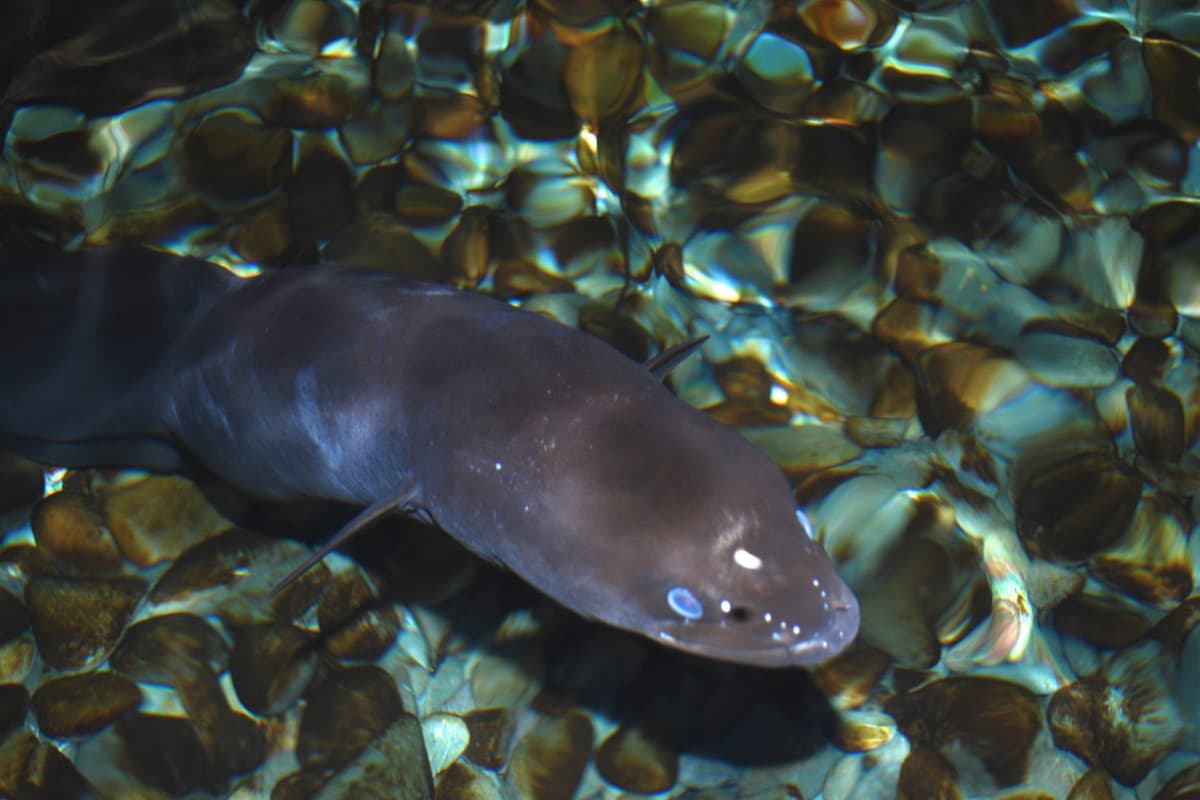
Freshwater eels are long, snake-like fish found in rivers and lakes.
Freshwater Eel Natural Habitat and Distribution
Freshwater eels are migratory species, born in the ocean but primarily grow in freshwater. Most of their adult life is spent in rivers, lakes, and estuaries. When they reach maturity, they return to the ocean to spawn and then die.
Juvenile eels begin life as larvae, drifting with ocean currents close to shore. Once in coastal waters, the larvae transform into transparent glass eels. They then enter estuaries and develop pigmentation, becoming elvers. Elvers continue migrating upstream into rivers and freshwater lakes to grow.
The species Anguilla marmorata (spotted eel) can live in freshwater, brackish water, and even highland streams, showcasing their ability to navigate obstacles. In Vietnam, morphological studies and DNA analysis have confirmed 3 species of freshwater eels, predominantly distributed in the central region.
Distribution of Freshwater Eels
Freshwater eels are distributed in over 150 countries, living in river systems and seas across the Pacific, Atlantic, and Indian Oceans. They are absent from the South Atlantic and the western coast of North and South America. Asia is the most diverse region for eels, particularly in Southeast Asia and East Asia.
Southeast Asia is home to approximately eight species/subspecies, found in Vietnam, Cambodia, Thailand, Malaysia, Indonesia, the Philippines, and Myanmar. Despite their global distribution, all freshwater eels migrate to the ocean to spawn, including in the Sargasso Sea and the northwest Pacific.
Freshwater Eels in Vietnam
Vietnam's river systems play a crucial role in the life cycle of freshwater eels. In central Vietnam, provinces from Quang Binh to Phu Yen are key areas for harvesting freshwater eels in the wild, accounting for most of the country's eel fishing, especially in Phu Yen and Binh Dinh.
Ocean currents, such as the warm East Sea current and the Kuroshio current in winter, help bring eel larvae to the area. The Mekong River basin, particularly in the Mekong Delta (e.g., Ca Mau), is the largest area for farming freshwater eels, but most of the eel larvae are still imported from central Vietnam or abroad.
Naturally, A. marmorata is distributed along the Mekong River basin. In Vietnam, freshwater eels are concentrated in the central region and the Mekong River basin. East Asia (Japan, Korea, China, Taiwan) is the primary distribution area for Anguilla japonica, which is linked to the development of the eel farming industry.
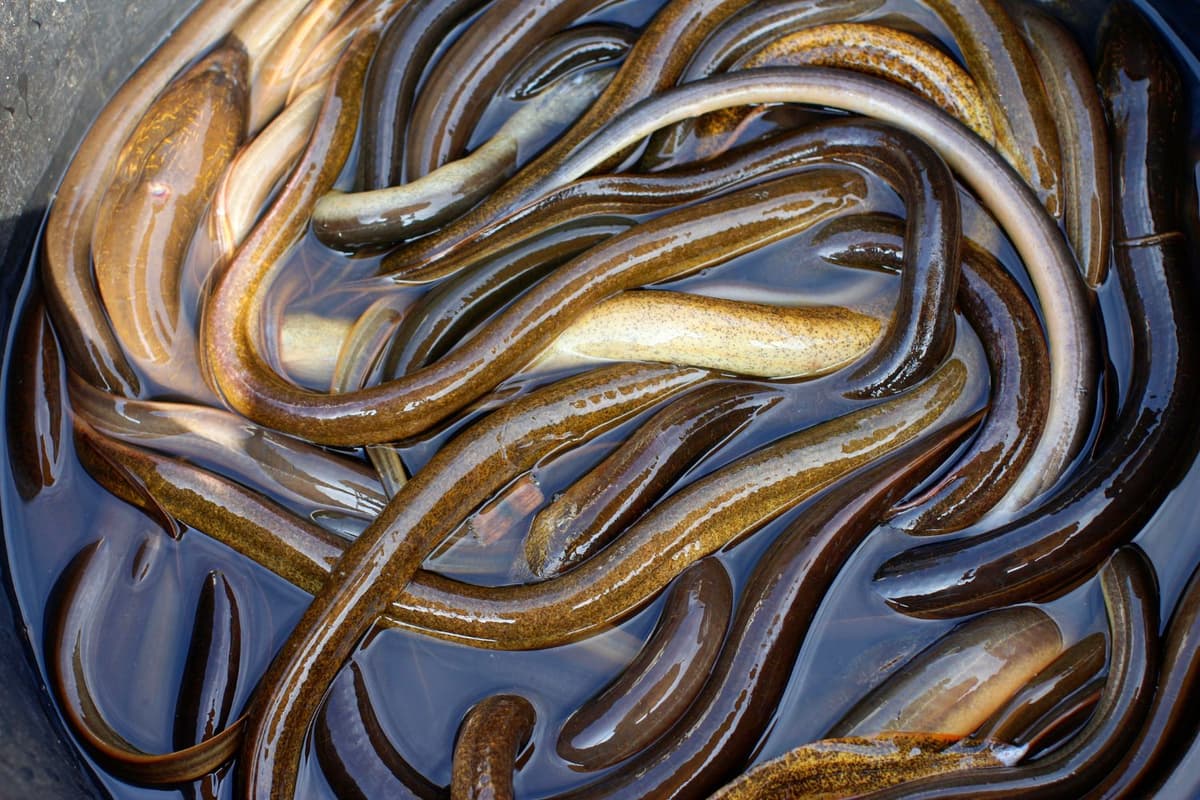
They migrate between freshwater and the sea to breed.
Freshwater Eels in Cat Tien National Park
Cat Tien National Park, with its extensive network of rivers, streams, wetlands, and floodplains along the Dong Nai River, provides an ideal habitat for a variety of freshwater fish species, including eels from the order Anguilliformes.
According to the official fish checklist of Cat Tien National Park, the order Anguilliformes is recorded, particularly species, which inhabit rivers, streams, and sites such as Dong Nai and Bau Sau. These eels typically live in benthic habitats, hiding in mud, crevices, or under rocks in slow-moving waters rich in organic matter.
Although not a flagship or endemic species like some of the park's rare mammals or birds, Anguilliformes contribute to Cat Tien's overall aquatic biodiversity, which supports around 159 recorded freshwater fish species. They reflect the park's relatively pristine riverine ecosystem with minimal pollution and abundant headwater forests.
Due to their secretive, nocturnal lifestyle, these eels are rarely observed directly by visitors, but they may be noted during fisheries surveys or mentioned by local rangers. Their conservation is indirectly supported by efforts to protect water quality and upstream forest cover in this key biodiversity area of southern Vietnam.
Diet and Predator
Freshwater eels are carnivorous and opportunistic feeders, preying on any suitable prey. Their natural diet includes crustaceans, small fish, and aquatic animals. They often feed on dead or dying animals on the riverbed. In Vietnam, farmed eels in the Mekong Delta are commonly fed with trash fish such as tilapia as they mature.
Hunting Habits
Freshwater eels mainly hunt at night. During the day, they typically hide in the mud, rock crevices, or wooden logs on the riverbed.
Due to their nocturnal and murky water activities, eels rely on their highly sensitive sense of smell (able to detect chemicals at very low concentrations) and a well-developed lateral line to sense the movement of water caused by prey. Their small mouths and specialized swimming abilities allow them to tear prey apart by biting down and twisting their bodies.
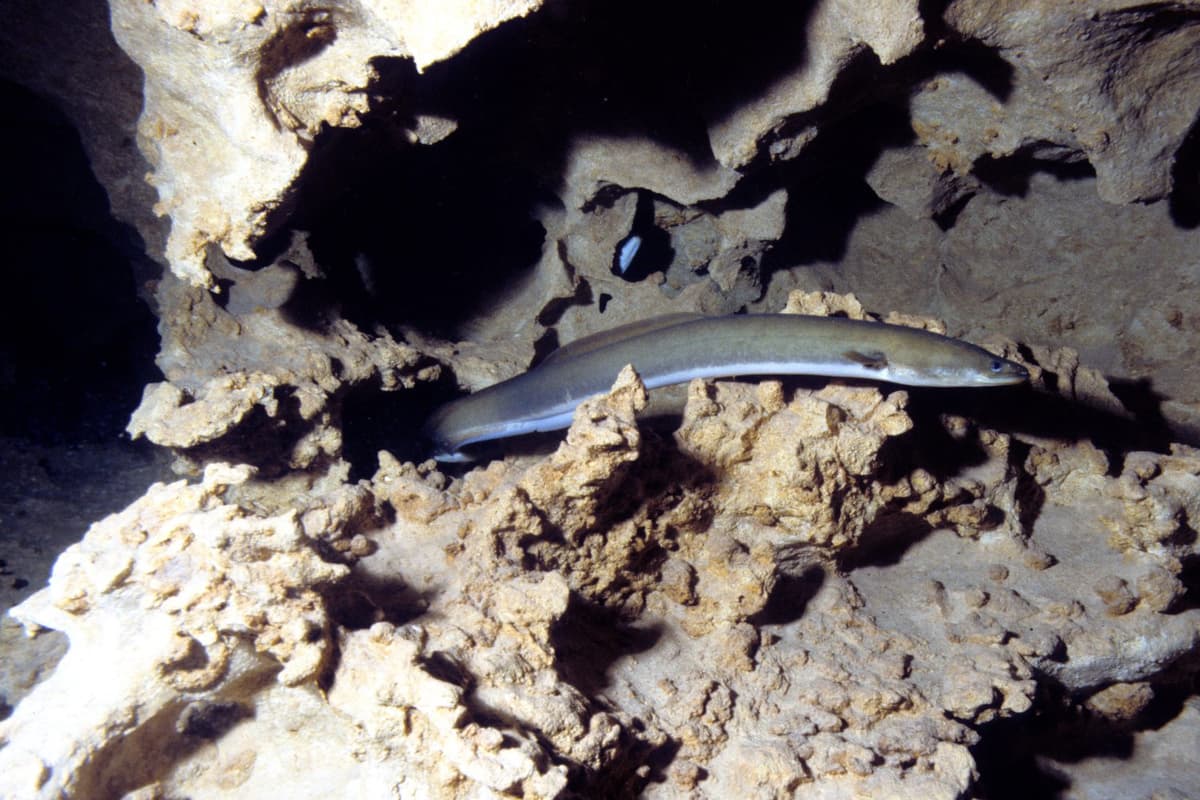
Freshwater eels have slippery, smooth skin for efficient movement.
Predators & Ecosystem Role
Though freshwater eels are predators, they are not at the top of the food chain. They play a critical role as an important "middle-tier" species, both as predators and prey. Natural predators include larger fish, fish-eating birds (such as herons), otters, and marine mammals.
Humans pose a significant threat through overfishing (particularly during the glass eel stage for aquaculture) and illegal trade. Eels are an essential component of the food web in their ecosystems.
The eel’s slimy glycoprotein mucus makes it slippery, hard to catch, and helps retain moisture when out of water. Eels can dig burrows in the mud or sediments to hide and ambush prey. Their camouflage colors (brown, olive, yellow-olive) blend with the riverbed. They can also swim backward quickly, allowing them to retreat into burrows when in danger.
Reproduction of Freshwater Eels
Freshwater eels are a migratory species: they are born in the ocean, grow in freshwater, and then return to the ocean to reproduce. They are a semelparous species, meaning they spawn only once in their lifetime and then die. A female Japanese eel (Anguilla japonica) can lay between 2 million and 10 million eggs.
The eggs float or attach to suspended matter. Most eel species provide no parental care for their eggs or larvae. After hatching, larvae must survive on their own and drift with ocean currents to return to coastal waters.
- Life cycle overview: Eggs → Leptocephali larvae → Glass eel → Elver → Yellow eel → Silver eel.
- Ocean phase: Eggs and leptocephali larvae
Eels spawn in deep oceanic waters, such as the Sargasso Sea or the northwest Pacific. Leptocephali larvae are transparent, leaf-shaped, and live in suspension, feeding on marine snow. This stage lasts for 3–5 months in tropical waters or 6–10 months in temperate waters as they drift toward shore.
- Coastal phase: Glass eel
Upon reaching coastal areas, leptocephali transform into glass eels, small (a few cm) and nearly transparent. In Vietnam, glass eels (mainly A. marmorata) are harvested from Phu Yen and Binh Dinh from October to May.
- Freshwater phase: Elvers & Yellow eels
Glass eels enter river mouths, develop pigmentation, and become elvers (~10 cm), continuing upstream. The yellow eel phase is the longest stage, lasting 5–20 years or longer, before reproduction.
- Reproductive migration phase: Silver eel
Before migrating to the ocean, eels undergo a transformation known as "silvering," in which their bodies turn silver and their eyes grow twice as large. They stop feeding entirely, their digestive systems shrink, while their hearts, swim bladders, and reproductive organs develop. They use Earth's magnetic field to navigate back to the ocean spawning grounds.
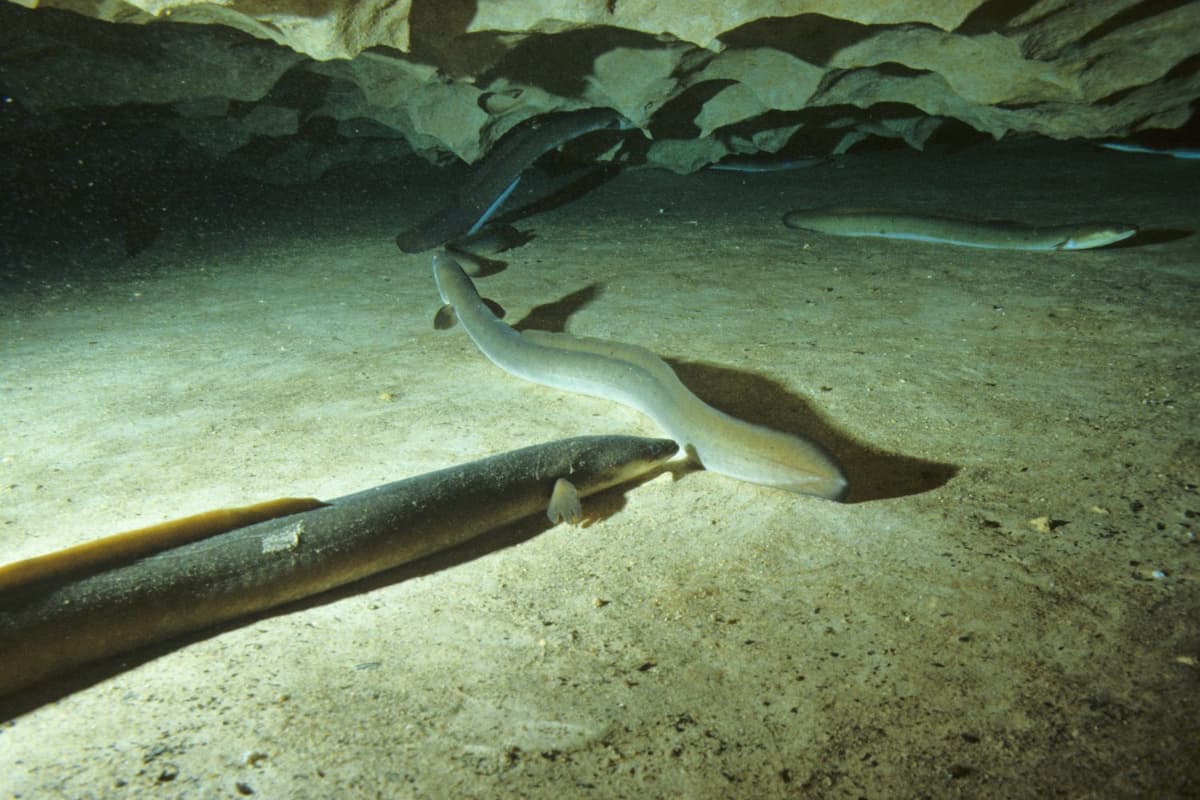
Their life cycle includes both freshwater and marine stages.
Threats and Conservation Status
Conservation Status
The conservation status of eel species is alarming due to significant population declines:
- European eel (Anguilla anguilla): Listed as Critically Endangered on the IUCN Red List, with a population decline of about 80% since the 1960s.
- American eel (Anguilla rostrata) and Japanese eel (Anguilla japonica): Listed as Endangered.
- Tropical species like Anguilla borneensis are Vulnerable, while A. Bicolor and A. bengalensis are Near Threatened.
In Vietnam, no effective conservation measures have yet been implemented. While the Sông Hinh Reservoir (Phu Yen) has been designated as an eel conservation area since 2008, no practical activities have been carried out due to a lack of funding.
Threats
One of the major threats to eel populations is the construction of hydropower dams and weirs, which block the migratory routes of juvenile eels and prevent adults from reaching the ocean to spawn. Urbanization and industrialization are also destroying river systems and wetlands, resulting in habitat loss. Changes in ocean currents directly affect the transport of eel larvae from the sea to the coast, further disrupting their life cycle.
Fluctuations in the North Equatorial Current and the Kuroshio Current are reducing the number of juvenile eels entering East Asia, while rising ocean temperatures threaten breeding conditions in deep-ocean areas such as the Sargasso Sea. The farming of eels, which is still heavily reliant on wild-caught eels, faces a major challenge because it cannot successfully breed them in captivity.
The high demand for eels, especially in dishes such as unagi and angulas, drives illegal trading and poaching of juvenile eels. Seafood Watch recommends limiting eel consumption to reduce pressure on wild populations. Eels, which live for 50 to 70 years or more, are also prone to accumulating heavy metals, chemicals, and pesticides in their bodies.
Conservation efforts
In the UK and across Europe, legal regulations protect eels under strict rules, including the European Eel Regulation. Catching eels for consumption is no longer allowed; any eel caught must be released immediately. In Vietnam, the law prohibits the import and export of wild eels (except for farmed products), but enforcement remains challenging.
Scientists are actively tracking eel migration routes using satellite tags to better understand their biology. In Vietnam, genetic research (DNA) is underway to accurately determine the distribution of eel species and develop appropriate management policies.
Ecologically, eels are considered indicator and umbrella species. Protecting eels means safeguarding the connectivity of river systems and the overall health of entire ecosystems.
Interesting Facts about Freshwater Eels
1. Freshwater eels can survive out of water by breathing through their moist skin, allowing them to move across wet ground between water sources.
2. Their sex depends on population density: crowded areas produce more males, while sparse areas produce more females. In Illinois, all wild eels are female because they migrate far inland.
3. Freshwater eels live very long lives, with some European eels reaching 85 years in the wild and up to 100 years in closed environments.
4. They reproduce only once, after decades in freshwater, migrate to the deep ocean to spawn, and then die without returning.
5. The oldest confirmed fossil ancestor of modern freshwater eels is Anguilla ignota, dated to about 43.8 million years ago.
Reference
- Cho, C. (n.d.). Nature’s most mysterious fish: Facts about fascinating freshwater eels. World Wildlife Fund.
- Illinois Department of Natural Resources. (n.d.). Family Anguillidae - Freshwater eel. Wild About Illinois Fishes!
- Nagao Natural Environment Foundation. (n.d.). ANGUILLIFORMES – eels.
- Nguyen, A. T., Tsukamoto, K., & Lokman, P. M. (2018). Composition and distribution of freshwater eels Anguilla spp. in Vietnam. Fisheries Science. https://doi.org/10.1007/s12562-018-1239-9
- Nguyen, T. T., & Hoang, V. D. (2021). An overview of the Anguillid eel culture in Vietnam. Journal of Aquaculture & Marine Biology, 10(3), 96-101. https://doi.org/10.15406/jamb.2021.10.00312