Have you ever wondered what creature has outlasted dinosaurs for over 430 million years, thrives in the harshest environments, and glows like a neon sign under a black light? Scorpions are not just desert survivors or scary movie props; they are ancient arachnids with incredible adaptations, from potent venom now used in cutting-edge medicine to living blind in total darkness. In places like Vietnam’s lush Cat Tien National Park, these nocturnal hunters reveal a hidden world after sunset. Join us to discover why scorpions are far more fascinating than frightening.
| Common name | Scorpion |
|---|
| Scientific name | Scorpiones (order) |
|---|
| Taxonomy |
Kingdom: Animalia
Phylum: Arthropoda
Class: Arachnida
Order: Scorpiones
22 families, >2,500 species
|
| Weight / Size | Weight: 10–60 g (largest ~60 g).
Length: 8.5 mm (smallest) to 23 cm (largest). |
|---|
| Lifespan | 3–8 years (wild); up to 25 years (captivity). |
|---|
| Population | Varies by species; many stable, some decreasing due to habitat loss & trade. |
|---|
| Habitat | Deserts, rainforests, grasslands, caves, mountains (up to 5,500 m). |
|---|
| Range | Worldwide except Antarctica. |
|---|
| Diet | Insects, spiders, small vertebrates; opportunistic carnivores. |
|---|
| Conservation status | Most not assessed (Least Concern); some Vulnerable/Endangered. |
|---|
Physical Characteristics of Scorpion
Scorpions, belonging to the arachnid class like spiders, have bodies divided into two main parts: the cephalothorax and the abdomen. The cephalothorax includes a hard carapace, eyes, chelicerae (pincers), and four pairs of legs.
The abdomen consists of the mesosoma, which holds internal organs and book lungs for breathing, and the metasoma, which has five segments, with the last containing the venomous sting. At the tip of the abdomen is the telson, which holds the stinger and venom gland, used to inject venom into prey.
Scorpions come in different sizes. The largest species, the Giant Forest Scorpion, can grow up to 29.2 cm long and weigh about 56 grams. On the other hand, the smallest species, the Typhlochactas mitchelli, is only about 8.5 to 9 mm long, making it the tiniest scorpion. Other large species, like the African Emperor Scorpion, can reach up to 20-23 cm and weigh around 57 grams.
One interesting feature of scorpions is their ability to glow under ultraviolet (UV) light. Their exoskeleton contains a substance that causes them to emit a greenish or bluish glow when exposed to UV light.
Scorpions also have pincers, which can vary in size. Larger species like the African Emperor Scorpion have big pincers and rely on their strength to catch prey. In contrast, smaller species like the Centruroides have slender pincers but a more potent venom to immobilize their prey.
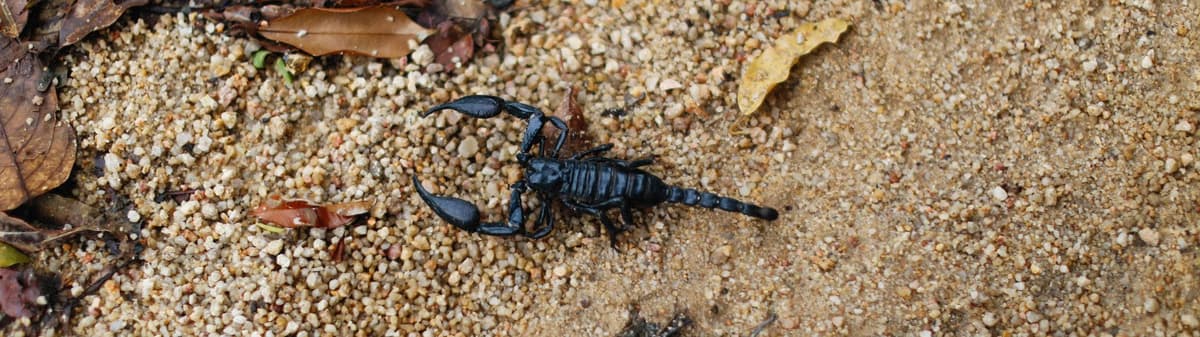
Scorpions come in a variety of colors. Desert species tend to be light brown or yellow, while those found in tropical forests are often dark black or blue-black.
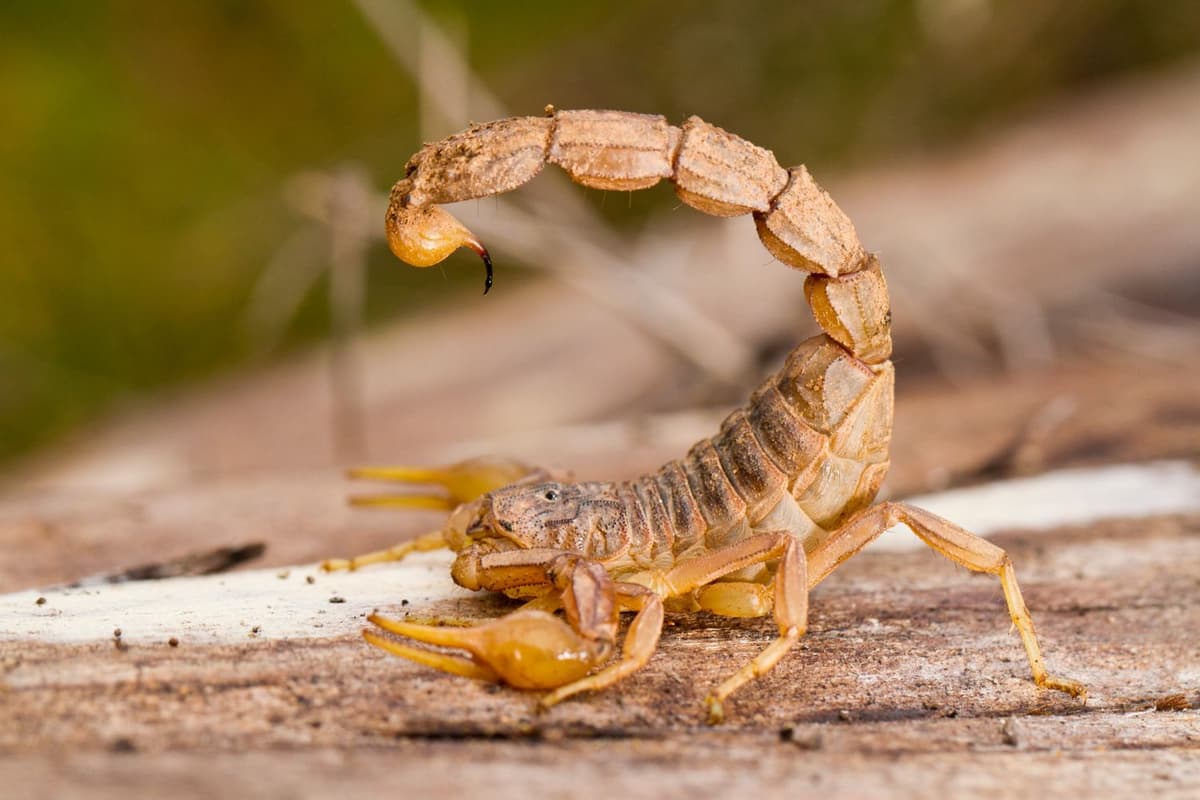
Buthus scorpion (Scorpio occitanus), light color and curved tail.
Subspecies of Scorpions
Out of more than 2,500 scorpion species worldwide, only about 25 (less than 1%) have venom strong enough to seriously harm or kill humans. Here are some of the most dangerous ones:
- Indian Red Scorpion (Hottentotta tamulus): Often called the deadliest, its neurotoxic venom can affect the heart and lungs, with fatality rates ranging from 8% to 40% in some cases.
- Deathstalker (Leiurus quinquestriatus): Also known as the Palestinian Yellow Scorpion, it has extremely potent neurotoxins that cause severe pain and can lead to breathing problems.
- Fat-tailed Scorpion (Androctonus australis): A tough desert species from North Africa with powerful neurotoxic venom and great endurance in harsh conditions.
- Arizona Bark Scorpion (Centruroides exilicauda): The most dangerous scorpion in North America, known for painful and sometimes serious stings.
- Thick-tailed Black Scorpion (Parabuthus transvaalicus): Famous for its ability to spray venom up to one meter away as a defense.
Besides the dangerous ones, some species stand out for other reasons:
- Euscorpius flavicaudis: Very adaptable and even lives in the UK at high latitudes (around 51°N).
- Orobothriurus crassimanus: Lives at extreme altitudes up to 5,500 meters in the Andes mountains.
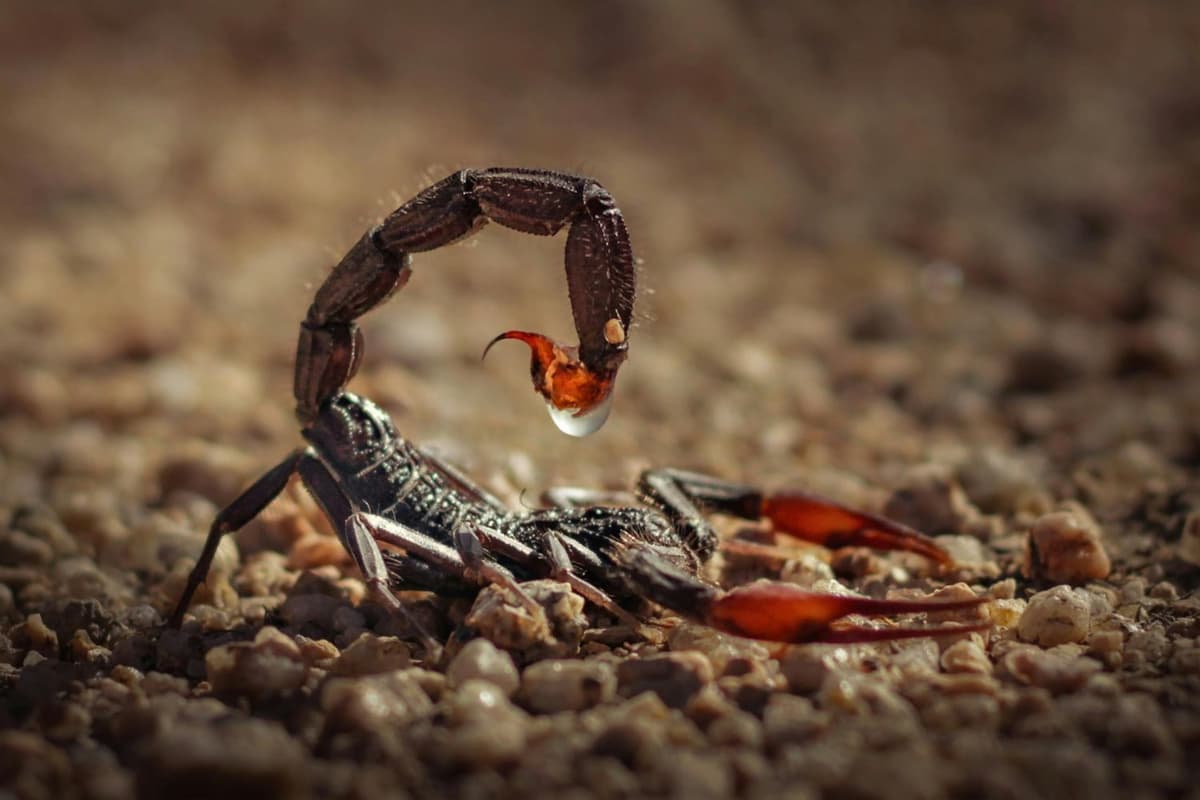
Asian forest scorpion on soil, dark body and strong claws.
Habitat and Global Distribution
Habitat
Scorpions thrive in varied habitats, including deserts, tropical rainforests, grasslands, savannas, caves, and even coastal intertidal zones. Their highest diversity occurs in subtropical areas rather than purely tropical ones. They adapt well by burrowing, hiding under rocks or logs, or living in trees.
Desert scorpions handle extreme heat and dryness with thick exoskeletons to reduce water loss, uric acid excretion for conservation, and deep burrows (up to 2 meters) to escape daytime heat. Examples include Hadrurus arizonensis from North America and Androctonus species from North Africa and the Middle East, which endure sandstorms.
Forest scorpions prefer humid, warm conditions in tropical areas, often under decaying leaves, wet rocks, or shallow burrows. They are typically larger, darker, with stronger pincers and milder venom, relying more on physical strength to capture prey. Notable examples are the Giant Forest Scorpion from India and Southeast Asia, and the Emperor Scorpion from West African rainforests.
Scorpion in Vietnam
Vietnam hosts a rich variety of scorpions in rainforests, mountains, and caves. The Heterometrus genus dominates, featuring large black or dark brown species common on forest floors or in burrows. Heterometrus silenus appears in areas like Cat Tien National Park and Cambodia, while Heterometrus laoticus (Vietnam Forest Scorpion) inhabits peat bogs and dense forests in Vietnam and Laos, sometimes used locally for medicine or food.
Cave-adapted species include Vietbocap canhi (Canh's Scorpion), a rare troglobitic type from caves like Son Doong, with reduced or absent eyes due to darkness. Other cave or mountain species belong to Chaerilus (e.g., Chaerilus chubluk in Dak Nong, Chaerilus honba in Hon Ba Nature Reserve) and Scorpiops (formerly Euscorpiops), such as Scorpiops dakrong and Scorpiops cavernicola.
In the Bay Nui region of An Giang, scorpions are harvested for fried or grilled consumption and medicinal wine, often sold at markets like Tinh Bien.
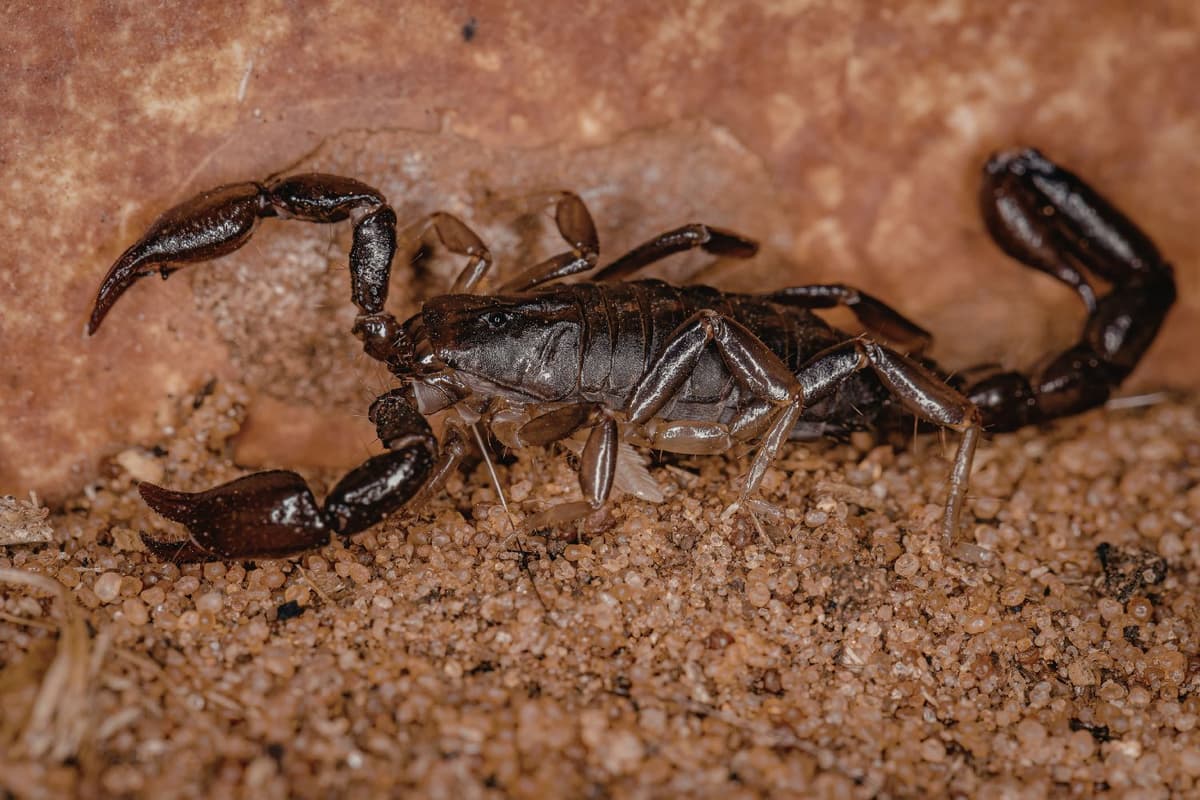
Scorpion close-up showing body texture, claws, and stinger.
Scorpion in Cat Tien
Cat Tien National Park is home to a variety of scorpion species, with the Heterometrus genus being the most prominent, including the Giant Forest Scorpion. Among the key species found here are Heterometrus silenus, a large black scorpion that is the most common in the park, and Heterometrus laoticus.
There has been some confusion regarding certain scorpion species in Cat Tien, with some individuals being mistakenly identified as Tityus sp. However, these scorpions actually belong to the Heterometrus genus. The exact population of scorpions in the park is unclear, but they are widely found and commonly encountered in many areas of the national park.
These scorpions primarily inhabit evergreen and semi-deciduous forests, often hiding under rocks or decaying logs. Key locations within Cat Tien where scorpions have been observed include Bau Sau, along the trail leading to this area; the Tung Tree area, near the camp and trail; and the area around the Bang Lang Tree.
Diet and Predators
Diet
Scorpions are opportunistic nocturnal predators, ambushing prey using vibration-sensing hairs. Their diet includes insects (crickets, grasshoppers, termites, beetles, wasps, spiders) and, for larger species, small vertebrates like lizards, snakes, or mammals. Cannibalism occurs, especially in captivity when food is limited. They tear prey with pincers and chelicerae, then secrete digestive fluids to liquefy it for consumption. Thanks to low metabolism, they survive 6-12 months without food.
Is Scorpion Poisonous?
Almost all scorpions possess venom, but the potency varies across species. Their venom contains a mix of neurotoxins, cardiotoxins, and other proteins. Among the over 2,500 species of scorpions, only about 25-30 have venom strong enough to potentially kill humans.
Venom mixes neurotoxins, cardiotoxins, and proteins. Scorpions control venom injection (0.1-0.6 mg doses) and can deliver "dry stings" to save energy. Most stings cause local pain, swelling, redness, and tingling like a bee sting. Severe cases from dangerous species lead to systemic effects: headache, muscle spasms, nausea, rapid heartbeat, breathing difficulty, or anaphylaxis in allergic people.
Natural Predators of Scorpion
Despite being skilled predators, scorpions are preyed upon by various animals. Invertebrates like ants and larger spiders, and vertebrates like lizards, birds, and small mammals, are common scorpion predators. Some species, like the grasshopper mouse, are immune to scorpion venom.
To defend themselves, scorpions raise their pincers and tail, with some species capable of spraying venom up to one meter. Interestingly, certain scorpions, like Ananteris, can even self-amputate their tail to escape danger. Scorpions also have the unique ability to glow under UV light, helping them navigate and find shelter in the dark.
Reproduction of Scorpion
Scorpions have a complex mating ritual known as the "mating dance." The male and female locate each other using chemical signals and vibrations. Once they meet, the male grabs the female's pincers and performs a dance-like movement, guiding her to a suitable surface to deposit his spermatophore (sperm packet). The female then passes over the spermatophore, and fertilization occurs.
After mating, the pair separates, with the male typically retreating to avoid being eaten, though this is rare. Scorpions give birth to live young rather than laying eggs. A single brood can consist of anywhere from 2 to more than 100 offspring, with an average of 8 to 25. Smaller species may give birth to only 1-5 young. Some species can reproduce asexually, without the presence of a male.
Newborn scorpions are soft, white, and unable to sting or hunt. Immediately after birth, they climb onto the mother's back for protection and hydration. They also undergo synchronized molts while on the mother's back, with a survival rate of 100% during this process. After their first molt, young scorpions leave their mother's back to live independently. They undergo 5-7 molts before reaching full maturity, a process that can take anywhere from 6 months to several years.
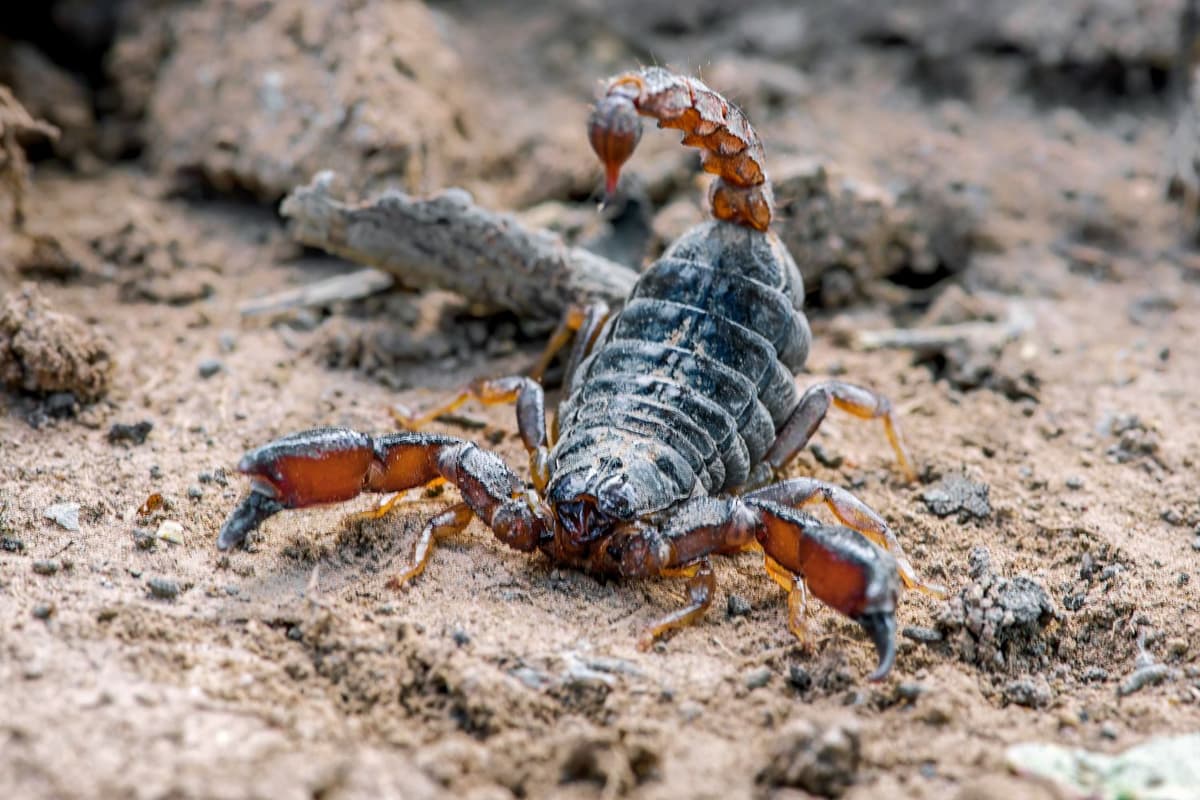
Scorpion on the ground, alert posture with raised tail.
Conversation status of Scorpion
Although scorpions are ancient creatures with remarkable adaptability, some species are facing the risk of extinction. Several scorpion species have been included in the IUCN Red List, such as Afrolychas braueri (Critically Endangered), Isometrus deharvengi (Endangered), and Chiromachus ochropus (Vulnerable).
In addition, some species, like Microtityus rickyi (a dwarf scorpion from Trinidad and Tobago), are not yet listed but are considered rare and threatened by deforestation. This loss of habitat due to human activity, such as logging and urban expansion, significantly impacts scorpions' shelter and food sources.
Scorpions also face threats from the pet trade, where species like Androctonus australis and Pandinus imperator (the Emperor Scorpion) are captured from the wild to be sold as exotic pets. In some countries, including China, Thailand, and Vietnam, scorpions are harvested for food or used to make medicinal wine, further increasing the pressure on their populations.
Spotting Scorpions in Cat Tien National Park
Based on field observations and classification, the main species here are the Asian Forest Scorpion (black forest scorpion) and Heterometrus laoticus.
Scorpions are nocturnal, so the best time to see them is after sunset, when they come out to hunt or mate. Bring a UV flashlight! Scorpions glow bright green under UV light thanks to special chemicals in their exoskeleton. This makes them easy to spot in the dark, even if partly hidden under leaves or rocks.
Best places to look are along forest trails, on open ground, or near paths. They often hide under rocks, rotten logs, or leaf litter.
Cat Tien is a humid tropical forest, so prepare well:
- Protect against leeches (common in wet areas).
- Don’t touch scorpions. Large Heterometrus species have mild venom (pain like a bee sting), but some people may have severe allergic reactions.
- Keep your distance because they can pinch with claws or sting if threatened. If you need to move one, use long forceps with soft tips, never bare hands.
- At night, watch for venomous snakes, giant centipedes, and other creatures. Always check where you step.
- Wear long pants, long-sleeve shirts, and closed boots.
If you’re new to night forest walks, join a guided Night Safari or herping tour. Katien Ranger Patrol is currently working with the Park Management Board to organize small-group safari tours in Cat Tien National Park. These tours offer a safe and exciting way to explore night wildlife, including scorpions and more.
Interesting Facts of Scorpion
1. Cave scorpions often turn pale (albino) and become completely blind because they live in total darkness for many generations.
2. Scientists are studying scorpion venom to make medicines, including treatments for brain cancer, strong painkillers, and antibiotics.
3. Scorpions glow bright green under UV (ultraviolet) light. This is one of their most amazing features.
4. Scorpions appeared around 430–435 million years ago and were among the first predators on Earth. Their ancestors were huge water creatures, some longer than 2 meters.
5. Some small scorpions (Ananteris) can break off their own tail to escape danger. Because the anus is in the tail, they can never poop again but can live and breed for up to 8 more months.
Reference
- Guo, Y., et al. (2024). Special survival strategy of first-instar scorpions revealed by synchronous molting behavior. Insects, 15(9), 726. https://doi.org/10.3390/insects15090726
- Kovařík, F., & Teruel, R. (2014). Three new scorpion species from the Dominican Republic. Euscorpius, (187), 1-27.
- Loria, S. F., & Prendini, L. (2021). Burrowing into the forest: Phylogeny of the Asian forest scorpions. Cladistics, 37(2), 109–161.
- McLeod, L. (n.d.). 8 top scorpion species suitable as pets. The Spruce Pets.
- Tsavo Trust. (n.d.). Why do scorpions glow under UV light?
- Yılmaz, F., et al. (2013). Epidemiologic and clinical characteristics and outcomes of scorpion sting in the southeastern region of Turkey. Ulus Travma Acil Cerrahi Dergisi, 19(5), 417-422. https://doi.org/10.5505/tjtes.2013.52333